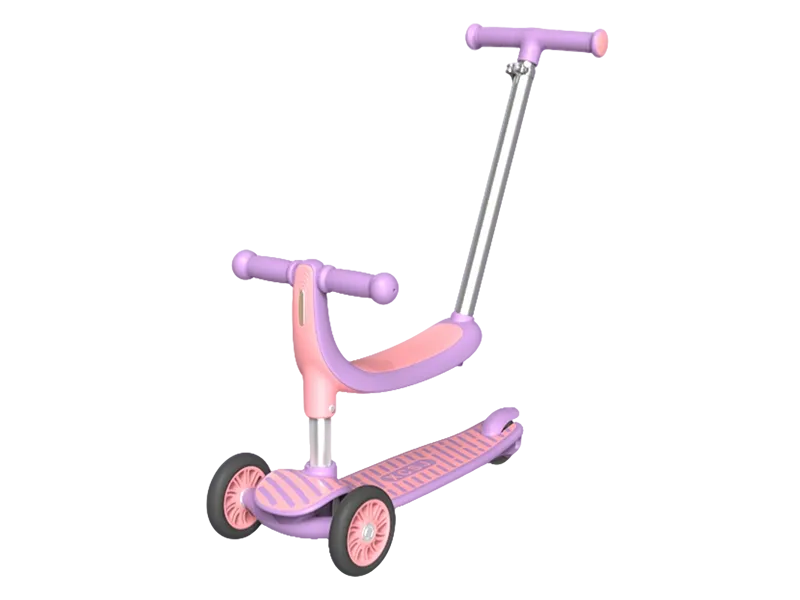
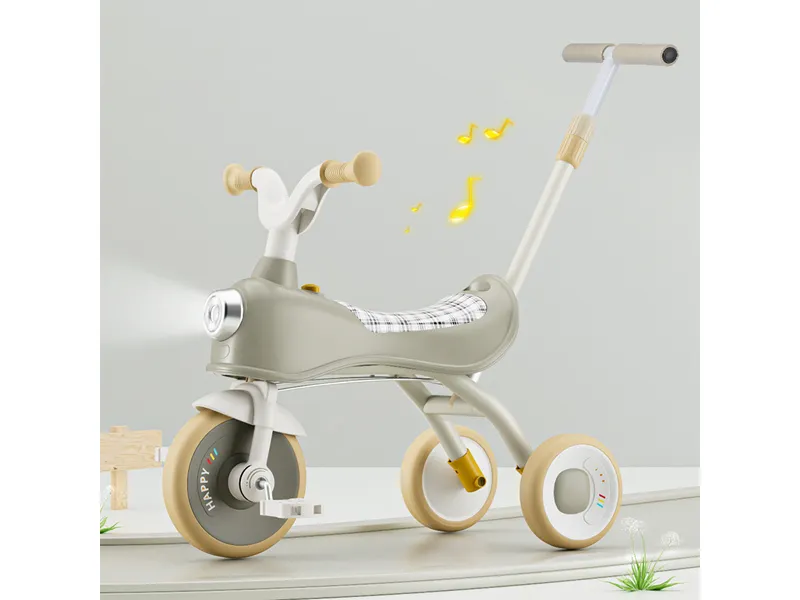
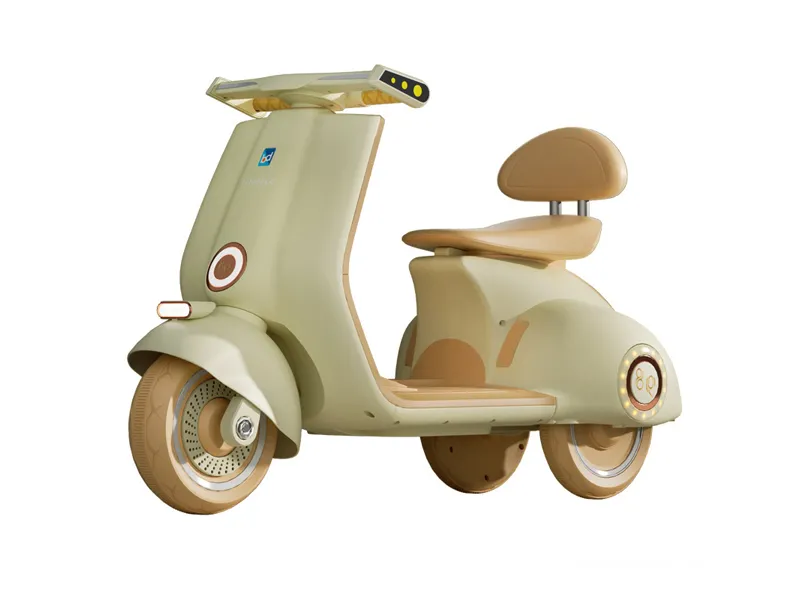
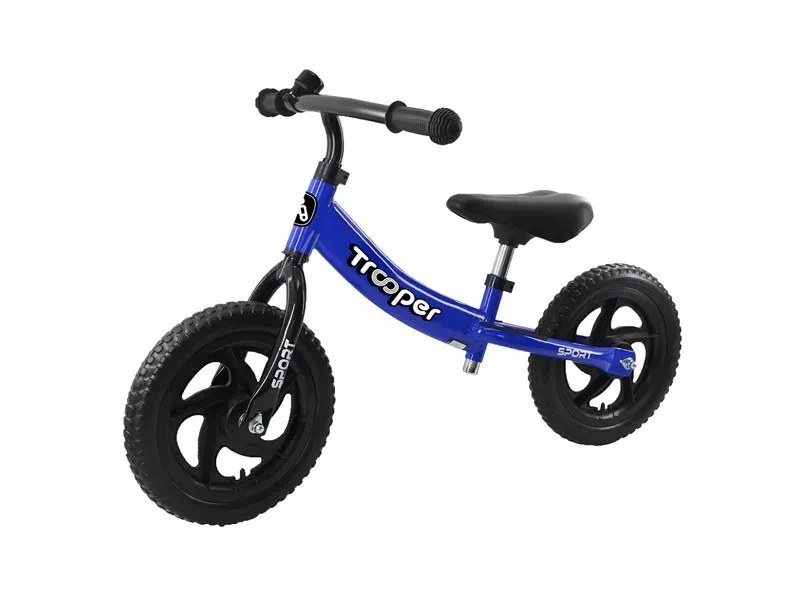
A tricycle stroller is usually the better choice when an adult still needs to control direction, speed and longer outings, while a regular tricycle is better suited to children who are physically ready to steer and pedal more independently. Neither design is automatically safer or better for every toddler. Age, height, motor development, riding environment, seat fit and the way the product will actually be used matter more than the number of accessories. The biggest difference is control. A tricycle stroller typically adds a parent push handle and may include features such as a high backrest, guardrail, canopy, footrest, rotating seat or rear brake. A regular children's tricycle is generally simpler and places more of the steering and pedaling responsibility on the child.
Tricycle Stroller vs Regular Tricycle: What Is the Difference?
A regular tricycle is fundamentally a child-operated riding product. The child sits on the saddle, holds the handlebars, pedals and steers. Its three-wheel layout provides a stable platform for early riding practice, although it still requires coordination and supervision.
Laobo's Children's Trikes range includes conventional models with features such as adjustable saddles, EVA or rubber tires, steering limits, bells and lightweight steel or aluminum structures. The BM-0655, for example, weighs 3 kg and includes an adjustable seat and detachable push handle while retaining the basic layout of a conventional children's tricycle.
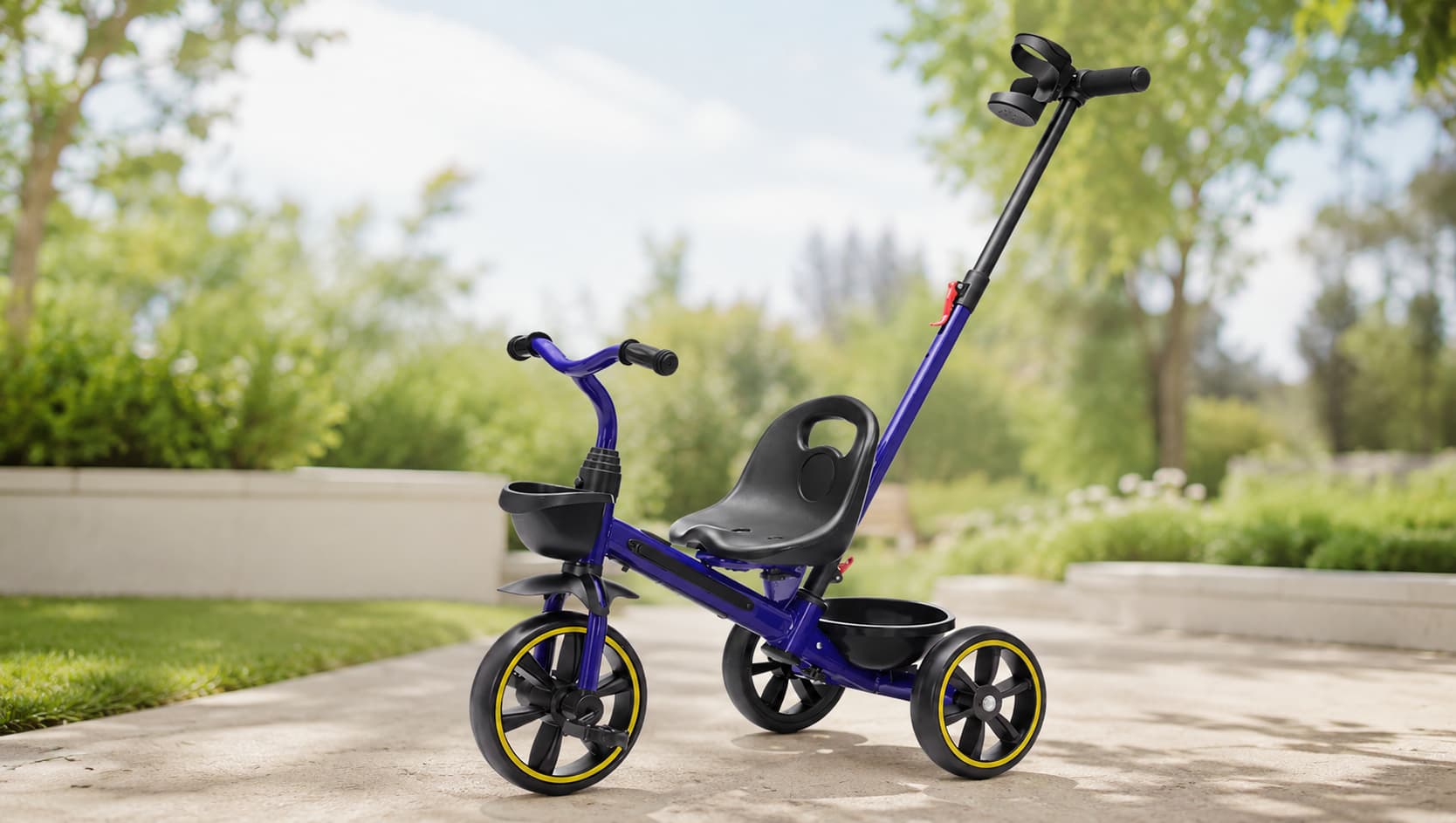
A tricycle stroller moves further toward parent-assisted mobility. Laobo's Tricycle Stroller range includes models with removable or adjustable parent handles, rotating seats, canopies and different wheel configurations. The HLF-903S Tricycle Stroller, for example, combines a parent-controlled design with a 360° rotating seat, adjustable backrest, guardrail and rear dual brake.
This makes the two categories suitable for different stages:
Tricycle stroller: adult remains actively involved in movement and control.
Regular tricycle: child takes increasing responsibility for steering and pedaling.
Convertible models: may bridge the two stages by removing parent-control or comfort components as the child develops.
Age and Riding Readiness: When Should a Toddler Use Each Type?
Age ranges printed on a product page are useful, but they should not replace an assessment of physical readiness. Similar to determining the appropriate age for balance bike use, tricycle readiness should be judged by a child's physical development rather than age alone. The American Academy of Pediatrics notes that most children become physically ready to handle a tricycle at around age three. It recommends choosing a low tricycle with relatively large wheels and using it only in protected areas away from vehicles, driveways and swimming pools. That guidance is especially relevant to independent tricycle riding.
A parent-controlled tricycle stroller may be designed by its manufacturer for an earlier age range because the child is not expected to provide all steering and propulsion. For example, Laobo's XSD-603 stroller-tricycle is listed for ages 1–5 and includes an adjustable parent handle, reversible seat, rear brake, canopy and anti-slip pedals. However, a younger child sitting in a parent-controlled mode should not be treated as developmentally equivalent to a three-year-old independently pedaling a tricycle.
Before moving toward child-controlled riding, check whether the child can:
Sit securely without constantly shifting sideways
Reach the intended footrests or pedals appropriately
Hold the handlebars comfortably
Understand basic steering
Pedal without excessive stretching
Stop or slow as intended by the product design
Stay attentive during riding
The American Academy of Pediatrics also identifies pedaling a tricycle as a typical movement skill developing around the preschool period, reinforcing the point that independent riding ability develops gradually rather than on a fixed birthday.
Parent Control, Comfort and Safety Features
The strongest reason to choose a tricycle stroller is not appearance—it is the additional control architecture. A typical stroller-style tricycle may include a parent push bar that allows the adult to guide the product during walks. Some versions add a freewheel or front-wheel clutch so that the child's pedals can remain independent of wheel movement when the adult is pushing.
Other useful features can include:
Guardrail: Helps define the seating area, particularly during parent-controlled use.
Backrest: Provides more support than a basic tricycle saddle.
Footrest: Gives the child somewhere to place the feet when not actively pedaling.
Canopy: Provides some overhead shade; buyers should still evaluate coverage and material rather than assuming complete sun protection.
Parent brake: Allows the adult to secure the tricycle when stopped.
Reversible or rotating seat: Lets some models face the parent during an earlier stage before being converted to forward-facing use. A regular tricycle removes many of these elements. That means less bulk, fewer parts and often lower weight. For a child already interested in active riding, this simpler structure can encourage pedaling and steering rather than passive transport.
The American Academy of Pediatrics recommends adult supervision for young tricycle riders, use away from traffic, and a properly fitting bicycle helmet whenever a child rides a tricycle. For importers, there is another important distinction: a tricycle with a stroller-like mode should not automatically be assumed to fall under exactly the same regulatory category as either a conventional tricycle or a stroller in every market. CPSC has specifically held discussions concerning products that combine stroller and tricycle modes, including questions around parent-controlled use, brakes, footrests and product design. Applicable standards therefore need to be confirmed according to the finished product and destination market.
Which Tricycle Is Better for Different Uses?
The better product depends largely on whether the adult or child is expected to control the ride. A family using the product for neighborhood walks may value a push handle, backrest, canopy and storage basket. A child who already pedals confidently may find those components unnecessary. For retailers and private-label brands, this also creates two different product positions. Businesses that already source from balance bike manufacturers can use tricycles to expand their early-rider product range into both parent-controlled and child-operated categories. Stroller tricycles generally support a more feature-rich, multifunctional range, while regular tricycles can serve customers looking for simpler early riding products.
Tricycle Stroller vs Regular Tricycle Selection Table
| Buyer / Use Case | Better Starting Option | Main Reason | Key Features to Check |
|---|
| Younger child during parent-led outings | Tricycle stroller | Adult steering and comfort support | Push handle, footrest, guardrail, seat |
| Child learning to pedal | Regular tricycle | Encourages active riding | Pedal reach, saddle height, steering |
| Long neighborhood walks | Tricycle stroller | Parent can take over movement | Handle height, brakes, canopy, storage |
| Independent preschool rider | Regular tricycle | Simpler child-controlled operation | Fit, wheelbase and steering limit |
| Premium multifunction retail range | Convertible tricycle stroller | Multiple use stages | Removable components and conversion |
| Lightweight entry-level range | Regular tricycle | Fewer components and simpler structure | Weight, frame and adjustability |
Laobo's HLF-903S Tricycle Stroller represents the feature-rich stroller category, while the BM-0655 Children's Trike provides a lighter 3 kg conventional configuration with an adjustable seat and detachable parent handle. For OEM/ODM sourcing, buyers should specify the target age range, maximum load, frame material, wheel material and diameter, seat adjustment, push-handle configuration, footrest, guardrail, canopy, steering limitation, braking system, folding requirement and packaging dimensions. A complete assembled sample should be evaluated before bulk production. Check not only whether each feature works, but whether the features work together without creating awkward pedal reach, excessive steering play or difficult conversion between modes.
FAQ
Is a tricycle stroller better than a regular tricycle for a one-year-old?
A parent-controlled model specifically designed and tested for that age range may be more appropriate than an independent pedal tricycle. Follow the manufacturer's stated age, height and weight limits and confirm the applicable safety requirements for the destination market.
At what age can children ride a regular tricycle?
The American Academy of Pediatrics states that most children are physically ready for a tricycle at around three years old, although individual development varies. Fit and riding ability should be considered along with age.
Can a tricycle stroller replace a normal stroller?
Not automatically. Some products provide stroller-like functions, but product classification, restraint systems, structure and applicable standards vary. Buyers should verify exactly what modes the finished product is designed and certified for.
Is a parent push handle useful after a child starts pedaling?
It can be. A detachable handle lets an adult take control when the child becomes tired or when moving through areas where closer supervision is needed. It can later be removed on models designed for independent riding.
What features matter most on a tricycle stroller?
Prioritize stable geometry, age-appropriate seating, a usable parent handle, reliable braking or parking control where provided, secure foot support, steering behavior and components that can be adjusted or removed correctly.
What should B2B buyers request before ordering?
Request complete specifications, age and load limits, materials, wheel sizes, brake details, steering system, removable-component instructions, packaging data, applicable test reports and a fully assembled production sample.
References
American Academy of Pediatrics — Ready for a Tricycle?
American Academy of Pediatrics — Your Child's First Tricycle or Bike: Important Safety Rules
U.S. Consumer Product Safety Commission — Tricycles with Stroller Modes

 English
 Español
 русский