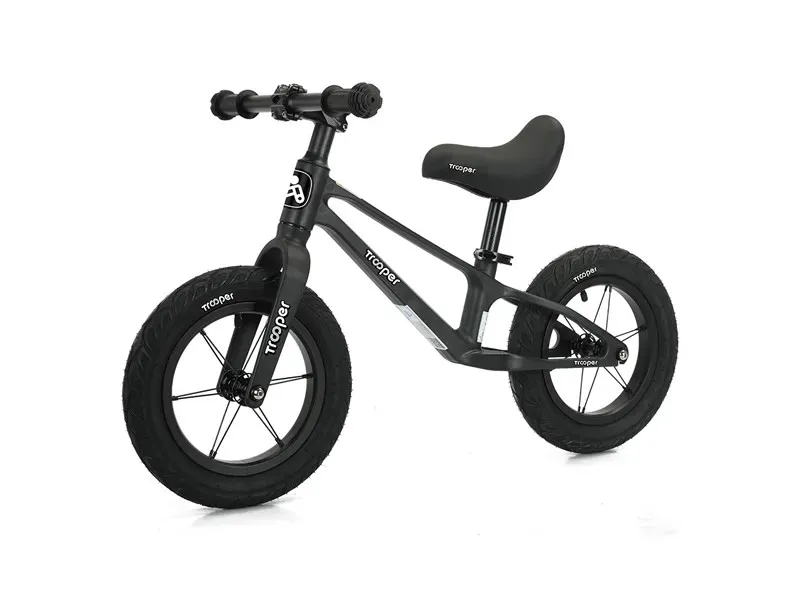
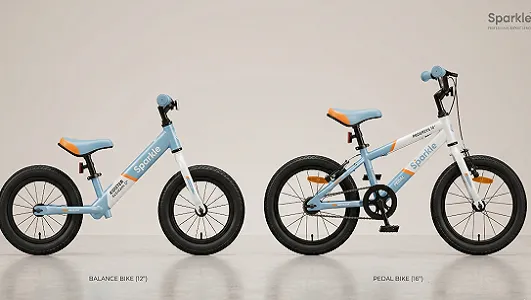
There is no single best balance bike frame material. Magnesium works well for brands that want integrated frame shapes and a differentiated premium appearance; aluminum is a versatile choice when low finished-bike weight, corrosion resistance and broad retail positioning matter; carbon steel is useful for durable, cost-conscious product programs. However, frame material alone does not determine how light, strong or easy to ride a finished balance bike will be. For buyers comparing a magnesium bike, an aluminium balance bike and a carbon steel model, the more useful approach is to compare the complete specification: frame geometry, wall thickness, fork, wheels, tires, hubs, saddle, finished-bike weight, surface treatment, packaging and intended retail price.
How Magnesium, Aluminum and Carbon Steel Frames Differ
Magnesium has the lowest material density of the three. The International Magnesium Association describes magnesium as the lightest commonly used structural metal, with a density of about 1.7 g/cm³ and approximately one-third lower density than aluminum. This gives designers opportunities to reduce mass or create larger integrated sections without automatically creating a heavy component. Magnesium balance-bike frames are often produced using casting processes that make flowing, integrated shapes possible. That can be useful for private-label programs where visual differentiation is important. Laobo's magnesium balance bike range currently includes 12-inch, 14-inch and selected electric configurations, with OEM options covering colors, decals and packaging.
Aluminum occupies a different position. The Aluminum Association notes that aluminum alloy properties—including strength, density, workability and corrosion resistance—can be adjusted through alloy composition. Aluminum sheet products commonly have densities around 2.66–2.84 g/cm³. For balance bikes, aluminum tubing allows manufacturers to develop relatively light conventional frame structures while retaining familiar bicycle-style geometry. Laobo's 1203L aluminum balance bike, for example, has a listed net weight of 2.9 kg.
Carbon steel is denser, but density should not be confused with finished-product weight. Steel provides useful structural strength, and modern steel products can achieve high strength with carefully controlled sections and geometry. Laobo's 1003 carbon steel balance bike is listed at 2.81 kg net weight—slightly below the 2.9 kg figure of the 1203L aluminum model. This illustrates why buyers should never rank finished bikes from material names alone.
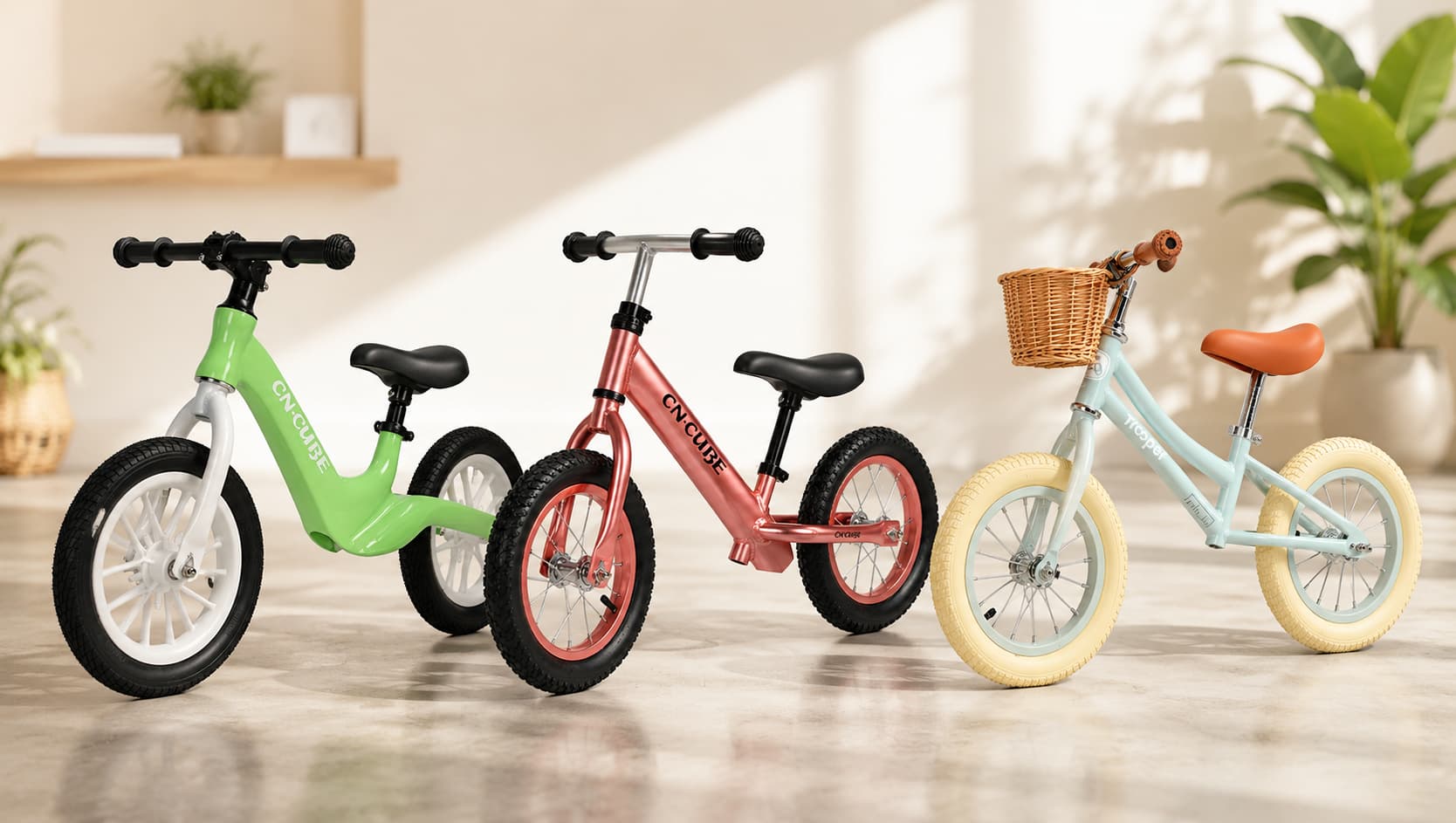
Which Material Makes the Lightest Balance Bike?
Magnesium is the lightest of these three structural materials by density, but a magnesium balance bike is not automatically the lightest finished bike. This distinction matters because a child rides the complete product, not a raw material sample. Sparkle Rides' current standard 12-inch magnesium models are listed around 3.3–3.4 kg, while representative 12-inch aluminum models are around 2.9–3.2 kg. The company specifically notes that frame geometry, wall thickness, tires, hubs, forks and accessories determine final weight.
The contrast becomes even clearer across different designs. Laobo's MY2 aluminum model is listed at 2.05 kg, while its MINI 1003 carbon steel model is listed at only 1.8 kg. These are different product architectures, so they are not a direct material test—but that is exactly the procurement lesson: design can outweigh the simple density ranking of magnesium < aluminum < steel.
For toddler products, buyers should therefore request:
A lightweight frame paired with heavy pneumatic tires and metal wheel components may produce a heavier bike than a carefully optimized steel model using EVA tires and lightweight rims. For retail positioning, this also means that claims such as “ultra-light because it is magnesium” should be verified against the actual finished specification rather than inferred from the raw material.
Durability, Manufacturing, Finish and Cost
Material selection also affects how the bike is manufactured. Magnesium is attractive where an integrated cast frame creates a recognizable silhouette. This can reduce the visual appearance of conventional tube joints and support more sculpted frame designs. The trade-off is that new frame structures can involve dedicated tooling, so OEM buyers should discuss mold availability, tooling cost and MOQ before treating magnesium as a simple material substitution. Laobo states that its standard magnesium OEM MOQ is typically 300 units per color, while different tooling requirements can change the project minimum.
Aluminum works well for brands that want conventional bicycle geometry with a strong balance between weight and manufacturing flexibility. The Aluminum Association also identifies corrosion resistance as an important characteristic of aluminum products, although the exact performance still depends on alloy and finishing.
Carbon steel can support cost-sensitive, high-volume ranges and durable conventional designs. Surface treatment becomes particularly important because the finished bike must withstand handling, storage, humidity and normal outdoor use. Paint quality, coating uniformity, weld finishing and corrosion-control requirements should therefore be written into the purchase specification rather than judged from catalog photographs.
For OEM programs, material cost should never be evaluated independently from manufacturing cost. A lower raw-material price can be offset by welding, finishing, component selection, packaging or heavier freight. Conversely, an expensive frame may be commercially justified when its appearance supports a higher retail position.
Laobo's broader balance bike range includes magnesium, nylon, aluminum and carbon-steel models, allowing importers to build several price tiers instead of trying to make one material serve every customer segment.
Balance Bike Frame Material Selection Table
| Buying Factor | Magnesium Alloy | Aluminum Alloy | Carbon Steel |
|---|
| Material density | Lowest of the three | Low | Highest of the three |
| Finished-bike weight | Can be light, but depends heavily on design | Often suitable for lightweight models | Can also be light with optimized construction |
| Typical frame style | Integrated / sculpted forms | Conventional lightweight bicycle geometry | Conventional welded structure |
| Visual differentiation | High | Medium to high | Medium |
| Corrosion consideration | Requires appropriate finishing | Naturally useful corrosion resistance; finish still matters | Surface coating is particularly important |
| Tooling consideration | Cast designs may require dedicated molds | Depends on tube/profile design | Usually suitable for conventional fabrication |
| Typical B2B positioning | Premium/private label | Broad mid- to premium range | Cost-conscious/high-volume range |
| Best purchasing metric | Complete bike + tooling cost | Complete-bike weight + specification | Complete-bike weight + finish + landed cost |
The key conclusion is that an aluminium balance bike should not be selected only because aluminum sounds lighter, just as magnesium should not automatically be positioned as the lightest finished product and carbon steel should not automatically be dismissed as too heavy. For importers, the best comparison is between actual production models at the same wheel size, rider range and component level. Before approving a frame material, request the complete specification, assembled sample, packaging dimensions, net and gross weight, applicable testing documentation, finishing requirements and OEM quotation. Then compare landed cost against the intended retail channel.
FAQ
Is a magnesium balance bike lighter than an aluminum balance bike?
Not necessarily. Magnesium has lower material density, but Sparkle Rides' current standard 12-inch magnesium models are listed around 3.3–3.4 kg, while representative aluminum models are approximately 2.9–3.2 kg. Geometry and components have a major effect on finished weight.
Is an aluminium balance bike a good choice for toddlers?
It can be when the complete bike has suitable weight, saddle height, steering geometry and component specifications for the intended rider. Material alone does not establish whether a bike fits a particular child.
Is carbon steel too heavy for a kids balance bike?
No. Carbon steel has higher material density, but optimized designs can still produce light bikes. Laobo lists the MINI 1003 carbon steel model at 1.8 kg and the standard 1003 model at 2.81 kg.
Which frame material is best for a premium private-label balance bike?
Magnesium can be attractive when integrated styling and visual differentiation are priorities, while aluminum can support a lighter conventional bicycle appearance. The better option depends on target price, tooling budget, specifications and desired brand positioning.
Which material is better for high-volume wholesale programs?
Aluminum and carbon steel can both suit volume programs. Buyers should compare unit cost, component specifications, production MOQ, packaging efficiency and freight rather than selecting solely by frame material.
What should an OEM buyer compare before choosing the frame?
Compare complete-bike weight, frame design, wall thickness or structural construction, wheels, tires, fork, finish, rider range, packaging, MOQ, tooling requirements, test documentation and landed cost.
References
International Magnesium Association — Magnesium: The Lightest Structural Metal
The Aluminum Association — Aluminum Industry Standards and Alloy Properties
World Steel Association — The Steel Story

 English
 Español
 русский