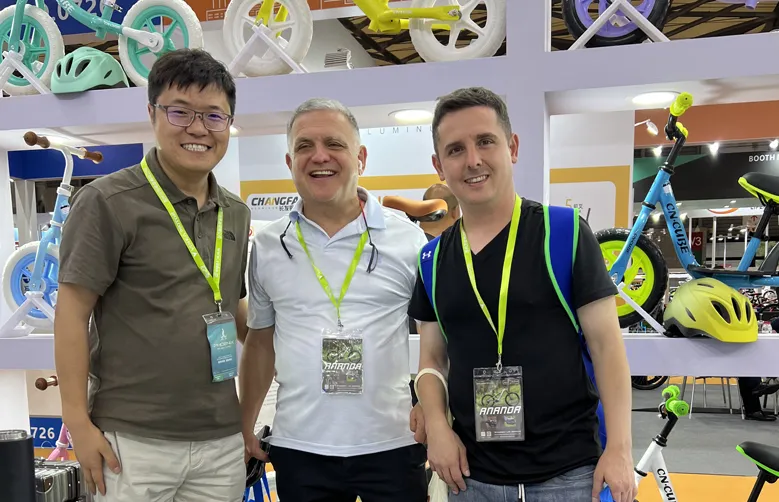
A reliable kids scooter factory should be able to do more than quote a competitive unit price. Buyers need to verify whether the supplier can manufacture the right scooter category, control material and component consistency, support OEM changes without creating new safety risks, provide appropriate test documentation, and maintain the approved specification from sample production through repeat orders. For importers and private-label brands, the best factory is therefore not necessarily the one offering the largest catalog. It is the supplier that can clearly explain how a scooter is built, which specifications can be customized, how quality is inspected, and which safety requirements apply to the intended age group and destination market.
What Should You Check Before Choosing a Scooter Factory?
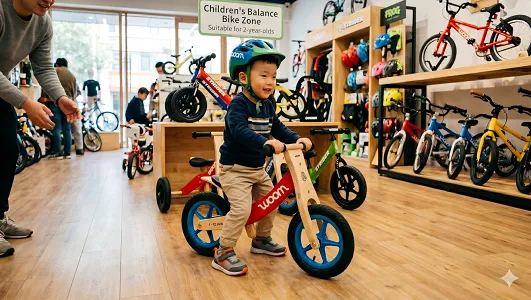
Start by matching the factory's actual product experience to the range you intend to sell. For brands developing both balance bike and scooter ranges, it is especially important to confirm whether the supplier has relevant experience with each product category. A supplier that mainly produces adult two-wheel scooters may not be the right partner for three-wheel toddler models with seats, lean-to-steer systems or light-up wheels. Likewise, a factory experienced with preschool scooters may need different tooling and component suppliers to produce larger junior models.
Laobo's custom kids scooters program covers toddler and junior scooter development with concept, design, prototyping and production stages, alongside options for colors, branding and packaging.
During supplier evaluation, request information about:
Scooter categories currently in production
Main export markets
Available molds and proprietary tooling
In-house versus outsourced production processes
Assembly and inspection capacity
Sample-development lead time
Production MOQ
Spare-parts availability
Test reports for relevant markets
Procedures for managing engineering changes
Do not judge capability only from showroom samples. Ask how repeat-order specifications are controlled. The same model produced six months later should not silently change wheel hardness, bearing quality, handlebar tubing, fasteners or plastic resin because a lower-cost component became available. Factory communication also matters. A good technical discussion should distinguish between cosmetic customization and changes that affect structure. Changing a logo is very different from changing deck thickness, steering geometry, folding hardware or maximum rider load.
Materials and Components: What Should Buyers Specify?
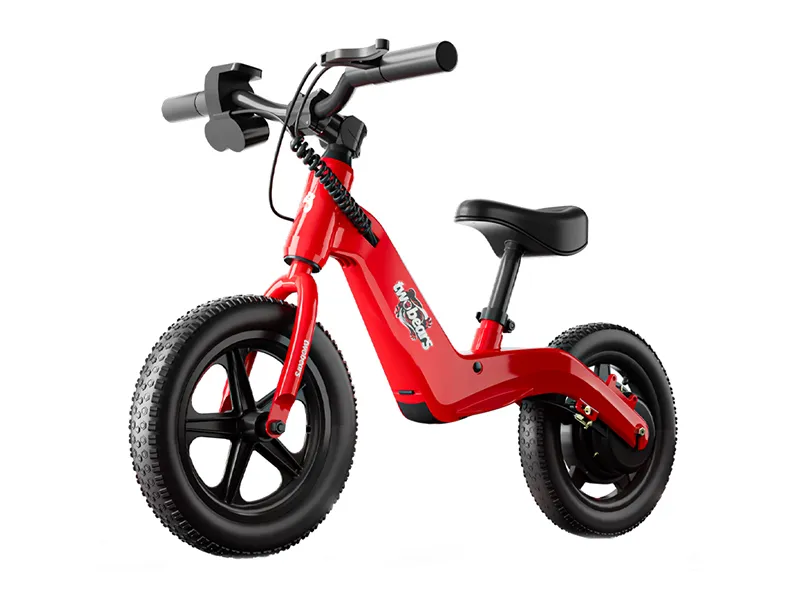
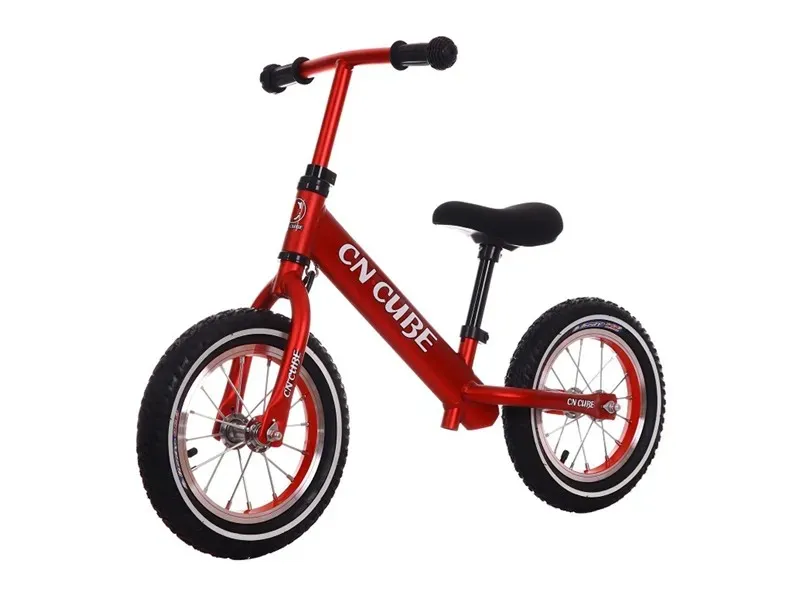
A kids scooter is an assembly of materials rather than one specification. The frame and handlebar structure may use steel or aluminum depending on the model, while decks can combine metal and molded plastic. Similar material-selection principles also apply to products such as an aluminium balance bike, where frame material affects weight, structural design and component specifications. Wheels commonly use PU or PVC constructions, and grips, bearings, folding joints, brakes and steering components all influence the finished ride.
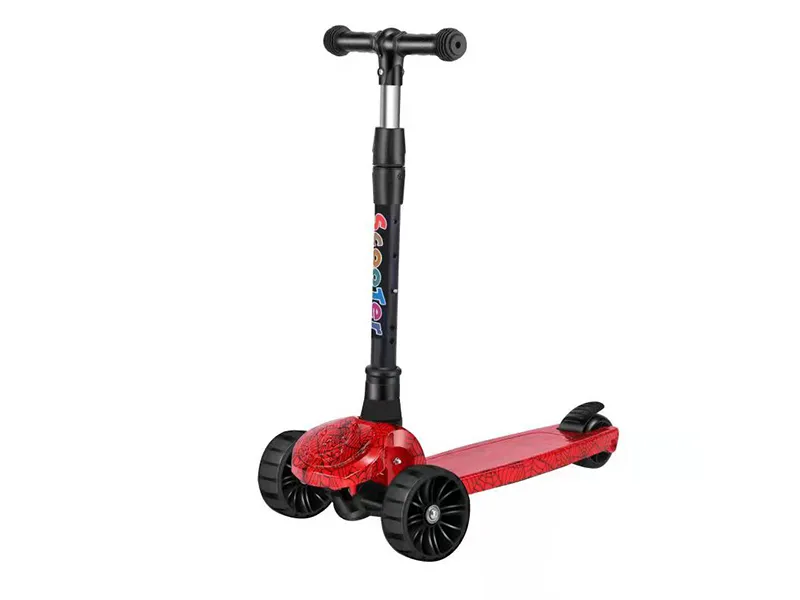
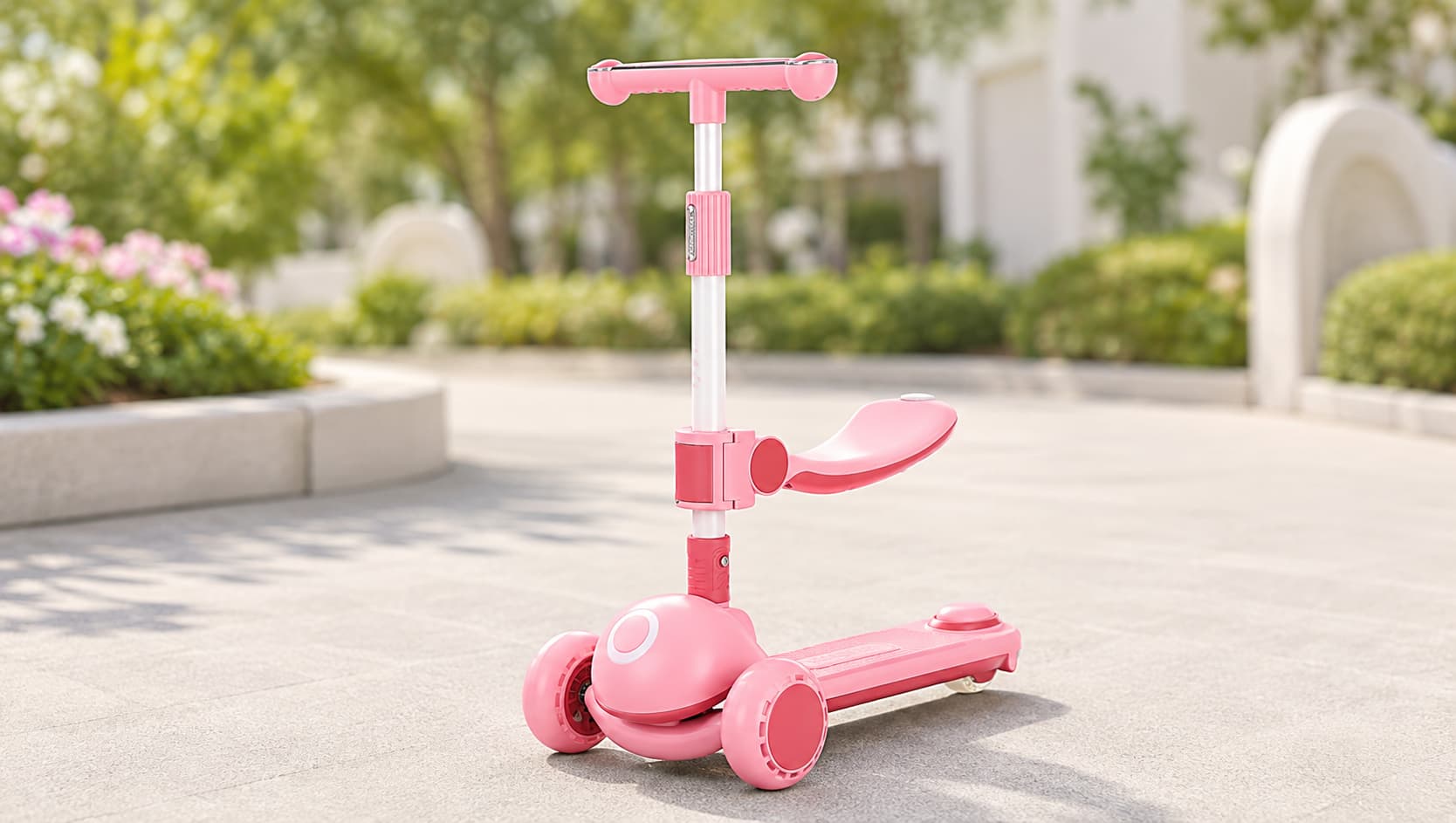
Laobo's Toddler Scooter range includes three-wheel models with features such as adjustable handlebars, seats, PU wheels, lighting systems and folding structures. Its Junior Scooter range includes PU- and PVC-wheel configurations as well as folding and full-cover-brake options. For an OEM specification sheet, define measurable requirements rather than phrases such as “high-quality material.” For the structural parts, specify material grade where necessary, tube dimensions, surface treatment and target rider load. For wheels, state diameter, width, material and any required hardness. For adjustable handlebars, define minimum and maximum height and the locking method.
Special attention should be paid to folding mechanisms and removable seats because additional moving parts introduce additional interfaces that must remain secure after repeated use. For example, Laobo's YH-SC1 Toddler Scooter uses a full-cover brake, PU wheels and adjustable handlebars, illustrating how a buyer's specification can involve several interdependent components rather than only frame material. A production sample should therefore be evaluated as a complete system. A stronger frame does not compensate for a loose steering joint, and premium wheels do not solve a poorly designed brake or handlebar lock.
Safety Standards and Quality Control Should Be Defined Before Production
Safety requirements depend on the scooter's design, intended rider and destination market. Buyers should establish the compliance route before approving tooling or packaging, not after mass production is finished. ASTM's F2264 Consumer Safety Specification for Non-Powered Scooters establishes performance, test and labeling requirements for scooters within its scope and states that the specification is intended for users aged five years and older. A buyer sourcing products for younger children should therefore not assume that the same standard automatically covers every toddler scooter configuration.
The European Commission similarly distinguishes between toy scooters and sports or transportation scooters. Its guidance notes that classification depends on factors including intended use and user characteristics, and that toy scooters can fall under EN 71-1 requirements. This is why a factory quotation stating only “CE” or “ASTM” is not enough. Ask for the exact standard, test report, tested model, laboratory, report date and whether your proposed OEM changes remain within the tested configuration.
Factory QC should then convert those requirements into repeatable inspection points. A practical QC plan can include:
Incoming inspection: tubing, molded components, wheels, bearings, fasteners, coatings and packaging materials.
In-process inspection: welding or structural joints, assembly torque, steering movement, handlebar locking, folding mechanisms and brake installation.
Final inspection: appearance, dimensions, function, wheel rotation, brake operation, stability, labels, instructions and packaging.
Pre-shipment sampling: compare production units against the approved golden sample and purchase specification.
For child products, this discipline is especially important. CPSC's toy-safety business guidance emphasizes that applicable children's products may require testing, certification and documentation depending on product classification and market requirements.
OEM Process, Factory Selection Table and RFQ Checklist
OEM development should begin with the target market rather than artwork. This principle applies whether a brand is developing a kids scooter or a custom balance bike. First define the intended rider, retail price position and product type. Then finalize structure and critical dimensions before choosing colors and packaging. Laobo's existing scooter customization workflow similarly places concept, design and prototyping before mass production.
A useful approval sequence is:
Product brief and target market
Existing model or new design selection
Material and component specification
Prototype or pre-production sample
Functional and compliance testing
Artwork and packaging approval
Pilot or mass production
Final inspection and shipment
| Factory Evaluation Item | What to Verify | Warning Sign |
|---|
| Product experience | Toddler/junior scooter experience | Only unrelated scooter categories |
| Materials | Defined tubing, plastics, wheels and coatings | “High quality” with no specification |
| OEM capability | Color, logo, structure and packaging controls | Every change approved verbally |
| Safety | Applicable standards and model-specific reports | Generic certificate with unclear model |
| Sample control | Approved reference / golden sample | Production allowed without final sample |
| QC | Incoming, in-process and final checks | Inspection only before shipment |
| Components | Stable approved supplier list | Parts changed without notification |
| Packaging | Drop protection, labeling and carton specs | Packaging decided after production |
When sending an RFQ, provide the scooter type, intended age or rider range, maximum load, wheel configuration, handlebar range, brake design, frame and deck requirements, folding function, seat option if applicable, colors, logo method, packaging, required standards, order quantity and destination market. This makes quotes much easier to compare. Two factories quoting the same “kids scooter” may actually be pricing different material thicknesses, wheel specifications, testing requirements and packaging standards.
FAQ
What should I look for in a kids scooter factory?
Look for relevant scooter-manufacturing experience, documented material specifications, sample-development capability, clear QC procedures, applicable safety documentation and controlled OEM production. Factory size alone does not demonstrate these capabilities.
What can be customized on an OEM kids scooter?
Typical options include colors, logos, graphics, packaging and selected components. Structural changes such as steering systems, decks, folding mechanisms or rider-load specifications require more engineering review because they can affect product performance and compliance.
Should I choose a toddler scooter factory or a junior scooter factory?
Choose according to your target users and product architecture. Toddler ranges commonly emphasize three-wheel stability, seats and lower handlebar positions, while junior models may prioritize larger rider fit, folding structures and independent riding features. Laobo maintains separate toddler and junior scooter ranges.
Is a CE mark enough when importing kids scooters into Europe?
It should not be treated as the only procurement check. Product classification determines which requirements apply, and buyers should verify the underlying test standards and documentation for the specific scooter. European Commission guidance distinguishes toy scooters from other scooter categories.
Should buyers inspect a scooter sample before bulk production?
Yes. Approve a complete assembled sample and use it together with a written specification as the production reference. Test steering, wheels, brakes, adjustable parts, folding functions and any removable accessories.
What is the most important question to ask a scooter factory?
Ask: “How do you ensure the production scooter remains identical to the approved specification?” The answer should cover component control, incoming inspection, production checks, change approval and final inspection—not simply state that the factory has QC staff.
References
ASTM International — F2264 Consumer Safety Specification for Non-Powered Scooters
U.S. Consumer Product Safety Commission — Toy Safety Business Guidance
European Commission — Guidance on the Classification of Scooters

 English
 Español
 русский