How the non-electric, no-pedal Racing Balance Bike is designed for children's sliding races
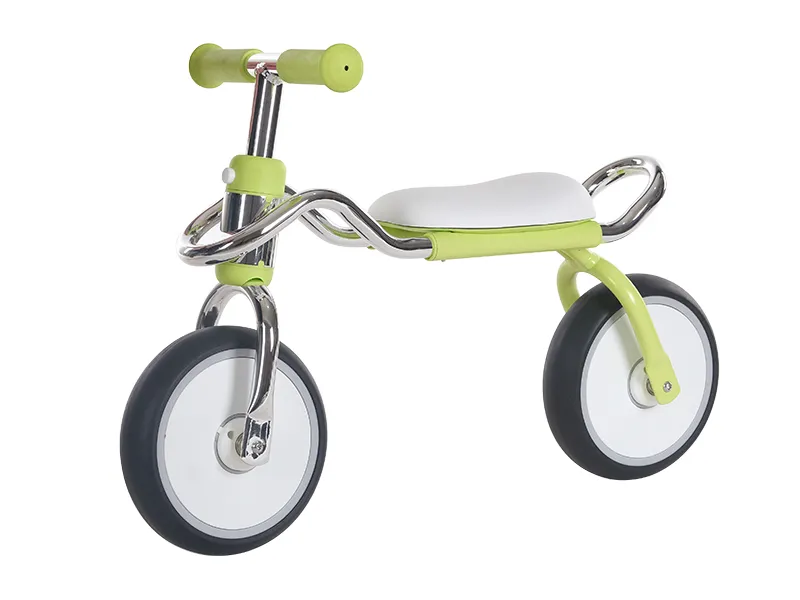
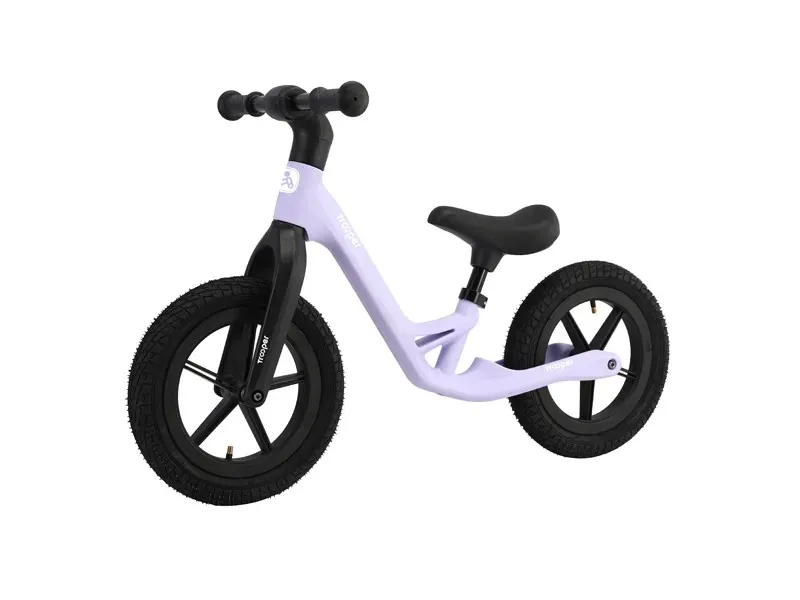
Summary: A Racing Balance Bike is a two-wheeled children's ride-on bike with no motor, pedals, chain or transmission. Children propel it by pushing against the ground with both feet, then coast while steering with their body weight and handlebars. The 12-inch format is common in children's balance-bike racing because it combines low weight, quick acceleration, responsive steering and easy foot control. This article explains the product's defining features, racing and training scenarios, market direction, configuration choices and safe-use requirements.
What Is a Racing Balance Bike?
A standard balance bike is primarily used to help a child learn balance and gliding. A Racing Balance Bike takes the same basic concept and develops it around speed, handling and race performance.
It has three defining characteristics:
• Two wheels;
• No pedals, chain or mechanical transmission;
• No motor or other assist: all forward motion comes from the child's alternating foot pushes.
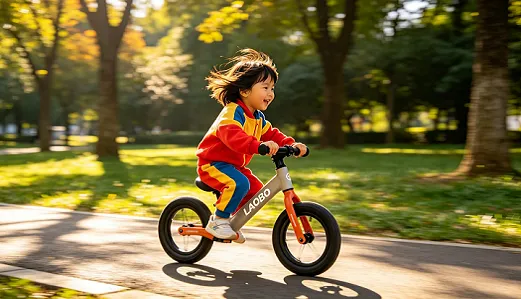
During a ride, the child builds speed by pushing with both feet. Once moving, the child lifts the feet onto the frame's footrest area, then uses body weight and the handlebars to steer. This separates pushing, balancing and steering into manageable skills, allowing children to build confidence before transitioning to a pedal bicycle.
A 12-inch wheel is not just a tire measurement. It is part of a complete relationship between race class, rider size, frame geometry and track conditions. Several children's balance-bike events in China specify a 12-inch wheel, a two-wheel design without pedals or transmission, and pre-race technical inspection. See the Zhangjiakou children's balance-bike racing rules announcement.
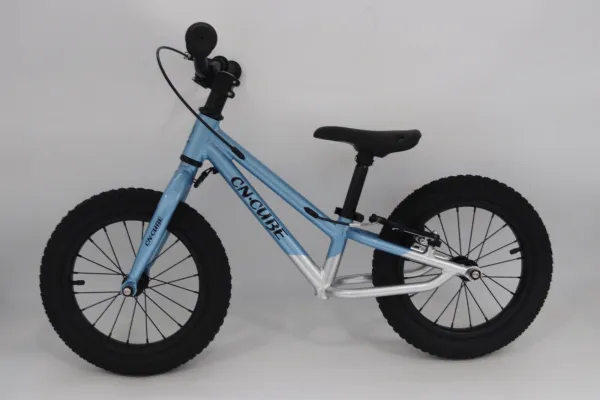
Core Features of a 12-Inch Racing Balance Bike
2.1 A Lightweight Frame Reduces Every Push
During a race, a child repeatedly accelerates, coasts, slows down and starts again. A lighter bike requires less effort per push and is easier to accelerate after a corner or a stop.
Common frame materials include high-strength steel, aluminum alloy, magnesium alloy and carbon fiber. Steel offers good durability and value; aluminum balances weight and cost; magnesium and carbon fiber are more commonly found in premium lightweight models.
Some 12-inch aluminum balance bikes on the market weigh around 2.5 to 3 kilograms, while steel versions are commonly around 3 kilograms or more, depending on the wheelset, tires, saddle and handlebar components. Examples of 12-inch model weights.
Lightweight construction must not mean under-engineering. Welds, the fork, handlebar, axles and frame joints still need sufficient strength for sudden steering inputs, minor contact and repeated impact on a track.
2.2 Low Center of Gravity and Balanced Geometry
Racing balance bikes generally use a low standover height and low saddle position so that a child can place both feet down quickly. A low center of gravity helps the bike remain stable in a straight line and reduces the risk of tipping during a turn.
Good geometry balances agility and stability:
• A shorter wheelbase produces quicker steering response for slaloms and tight corners;
• A moderate wheelbase improves straight-line stability;
• Fork angle, handlebar height and saddle position shape the child's riding posture;
• The footrest should let the child tuck both feet away while gliding without interfering with the next push.
The best racing geometry is not the most aggressive-looking geometry. It is the geometry that keeps the child in control while accelerating, coasting and turning.
2.3 Wheelsets and Bearings Affect Glide Efficiency
A racing wheelset has to balance low weight, impact resistance and low rolling resistance. Lightweight rims, efficient hubs and sealed bearings can reduce drag so that more of each foot push becomes forward speed.
Bearing count alone does not determine quality. Machining accuracy, sealing, lubrication and serviceability matter more. If a wheel develops play, noise or rough rotation, it should be inspected or replaced before the next ride.
2.4 Tires Should Match the Track
Two tire types are common on 12-inch balance bikes:
• EVA solid tires: puncture-resistant and easy to maintain, suitable for entry-level training and casual use;
• Pneumatic rubber tires: better grip, cushioning and cornering feedback, generally preferred for structured training and racing.
For asphalt or concrete tracks, choose a tire with smooth rolling and moderate tread. Grass, dirt or mixed outdoor tracks need a more pronounced tread pattern. Pneumatic tires also require regular pressure checks: excessive pressure reduces grip, while insufficient pressure can affect steering and rim safety.
2.5 The Saddle, Handlebar and Footrest Must Fit the Child
Racing does not mean sacrificing fit. With the child seated, both feet should reach the ground naturally and the knees should remain slightly bent. The handlebar width and grip diameter should suit small hands. If a hand brake is fitted for training, the lever must also be reachable and easy to modulate.
The footrest is a defining detail of a racing model. It should be positioned low on the frame, have a non-slip surface and rounded edges, and allow the child to bring the feet back into position without catching the legs.
2.6 Brakes Must Follow the Event Rules
Brake requirements vary by event. Some children's balance-bike races require no brake system and expect children to slow down by placing their feet on the ground. Training and recreational use may allow a lightweight hand brake. International 12-inch racing rules also include classes where brakes are explicitly prohibited. See an example of Strider's 12-inch race rules.
Always check the target event before buying or modifying a bike. Remove or disable a brake when the rules require a brake-free bike. For everyday training, decide based on speed, surface and the child's skill level. In every case, the child must learn a reliable way to slow down and stop.
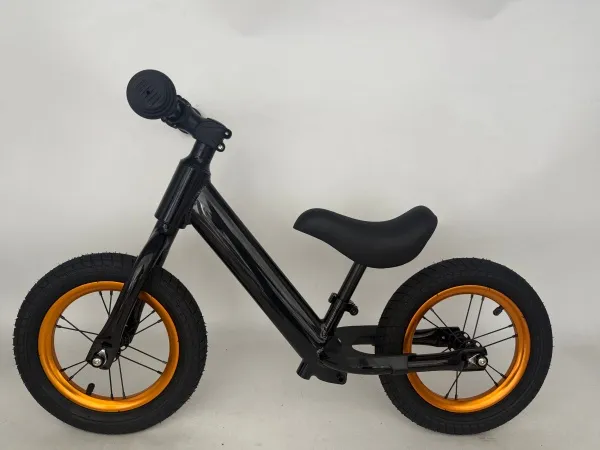
Where Can a 12-Inch Racing Balance Bike Be Used?
3.1 Children's Balance-Bike Races
This is the primary use case. Formats include short straight-line races, timed runs, slalom, obstacle courses, elimination heats and parent-child relays.
Typical race requirements include:
• 12-inch wheels;
• Two wheels with no pedals or transmission;
• No sharp or protruding body parts;
• Passing a pre-race technical check;
• Compliance with the event's age, height or weight category.
Rules for brakes, modifications, certification and protective equipment differ by event. The organizer's current technical rules always take priority.
3.2 Everyday Gliding and Skill Training
A racing balance bike can also be used for straight-line acceleration, controlled stopping, S-shaped slalom, narrow-lane riding and small-slope control. These exercises improve balance, coordination and route awareness.
Training should progress from slow to fast and from simple to complex. First establish pushing and gliding, then introduce foot lifting, steering and braking or foot-based deceleration. Chasing top speed before the basic skills are stable is counterproductive.
3.3 Children's Sports Clubs and Training Centers
Balance-bike clubs, children's sports centers and outdoor camps can build progressive courses around the 12-inch format. Beginner classes focus on balance and gliding; intermediate classes add starts and corners; competition classes work on racing lines, rhythm and reaction.
For institutional purchasing, consistency between bikes matters as much as the unit price. Check spare-parts availability, saddle adjustment range, tire replacement cost and the efficiency of batch maintenance.
3.4 Family Outdoor Activities
A 12-inch bike is compact and easy to carry, making it suitable for designated park areas, yards, campsites and parent-child outdoor activities. Families should prioritize easy adjustment, durability and serviceability rather than aggressive modifications for a short burst of speed.
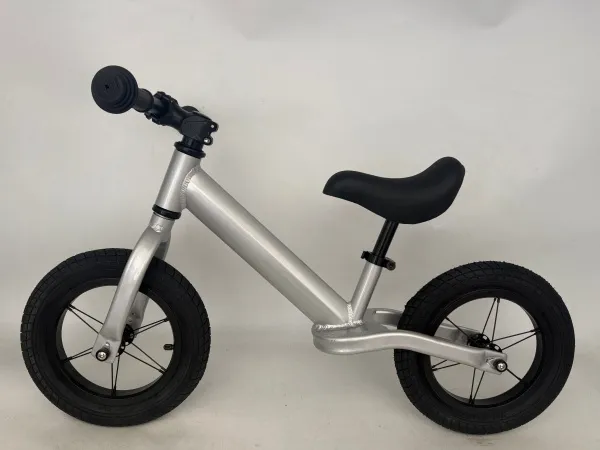
Market Status of Racing Balance Bikes
Racing balance bikes are moving from the toy category toward a more clearly defined niche that combines children's sports, structured training and organized events. The market is showing several notable trends.
First, race systems are becoming more standardized. In some regions, sports and education authorities are beginning to publish children's balance-bike racing rules and skill-assessment standards. Requirements for wheel size, vehicle structure, technical inspection and training progression are becoming clearer. This indicates a shift from isolated recreational activities toward systematic development.
Second, demand is moving beyond basic learning. Parents increasingly consider light weight, handling, training value, event participation and family interaction, rather than asking only whether a child can ride. This supports a distinct product tier for racing models.
Third, competition is shifting from appearance to ride quality. Frame weight, wheel efficiency, saddle adjustment, footrest design, tire grip and spare-part supply all affect real-world reputation. Premium products are exploring aluminum, magnesium and carbon-fiber construction to reduce weight while retaining stiffness.
Fourth, rules and venues remain fragmented. Brakes, modifications, certifications and age groups may be treated differently from one event to another. Access to dedicated tracks is also uneven. A brand that only advertises speed, without explaining rules, training and after-sales support, will struggle to build long-term use.
Overall, Racing Balance Bike is a growing but still specialized category. Opportunities are likely to come from children's race series, club training, camp experiences, parent-child sports and premium lightweight products.
How to Choose the Configuration of a 12-Inch Racing Balance Bike
The table below provides a practical selection framework. Final specifications should be based on the rider's body dimensions and the target event rules.
| Configuration | Entry | Training | Premium Competition |
|---|
| Frame | High-strength steel or basic aluminum | Lightweight aluminum or magnesium alloy | Advanced aluminum, magnesium alloy or carbon fiber |
| Bike weight | Prioritize durability and stability | Focus on reducing weight without losing stiffness | Further weight reduction with controlled strength |
| Wheelset | Basic rims and bearings | Light rims, efficient hubs | High-strength lightweight wheelset and precision bearings |
| Tires | EVA solid or basic pneumatic tires | 12-inch pneumatic racing tires | Track-specific balance of grip and rolling resistance |
| Saddle | Adjustable height | Wider adjustment range and lighter saddle | Lightweight design with improved support and fit |
| Handlebar | Basic steel or aluminum bar | Lightweight aluminum bar and stem | High-strength lightweight bar set optimized for width and height |
| Footrest | Basic non-slip footrest | Non-slip, rounded and easy to re-engage | Lighter, stronger and easier to service |
| Brake | Select according to training needs | Configure according to event rules | Strictly follow the rules of the race class |
| Best for | Casual gliding and basic training | Training and most amateur races | Structured training, events and performance riding |
Three principles make configuration decisions easier:
1. Fit comes before specifications. Age is only a reference. Minimum saddle height, standover height, handlebar position and maximum rider weight matter more. International 12-inch models often publish both age and inseam guidance, so check the child's actual leg length and inseam. Example of 12-inch fit guidance.
2. Choose the tire for the track. Indoor flooring, asphalt, grass and dirt tracks require different tread and pressure choices.
3. Confirm the rules before selecting a brake or modification. A training setup cannot automatically be used in every race, and a competition setup may be unsuitable for a beginner.
What to Check Before Buying
6.1 Confirm That the Child Can Reach the Ground
When seated, the child's feet should reach the ground naturally and the knees should remain slightly bent. A saddle that is too high makes starting and stopping harder; one that is too low reduces pushing efficiency.
6.2 Inspect the Frame and Fork
Check welds, frame joints, the fork crown, axle mounts and the handlebar clamp. There should be no cracks, sharp edges, obvious deformation, burrs or protruding parts.
6.3 Check the Wheels and Bearings
Lift each wheel and spin it. It should rotate smoothly without unusual noise or side-to-side movement. Wheel stability has a direct effect on straight-line and cornering performance.
6.4 Check the Tire Condition
Look for tread wear, damage and abnormal pressure. Pneumatic tires should be used with a suitable pump, and the family or club should have access to replacement tubes or tires.
6.5 Ask About Spares and Service
Tires, tubes, bearings, saddles, grips and axles may need replacement over time. The more frequently the bike is raced, the more important it is to choose a brand with accessible parts and clear maintenance instructions.
6.6 Verify the Technical Requirements Before an Event
Confirm wheel size, vehicle structure, brake requirements, permitted modifications, certifications, protective equipment and check-in procedures in advance. Some events inspect the bike before racing, so a non-compliant configuration may be rejected on site.
Safe Use and Routine Maintenance
Use the bike on a closed, level surface away from motor vehicles. Children must wear a properly fitted helmet and, depending on speed and surface, knee, elbow and wrist protection as well as enclosed athletic shoes.
Before every ride, a parent or coach should check:
• Whether the handlebar and saddle are firmly secured;
• Whether the front and rear axles are tight;
• Whether the tires are properly inflated and undamaged;
• Whether the bearings turn smoothly;
• Whether the frame and fork show cracks or deformation;
• Whether the footrest and grips are secure;
• Whether the brake configuration matches the current track or event rules.
If the bike has no brake, practice foot-based deceleration and stopping at low speed on a flat surface. If it has a hand brake, let the child learn lever control gradually at low speed. Modifications must not add sharp parts or interfere with steering, wheel rotation or the child's ability to put both feet down.
Conclusion
The purpose of a 12-inch Racing Balance Bike is not simply to be lighter or faster. It is to help a child push efficiently, glide smoothly, steer accurately and slow down safely.
For beginners, low weight, adjustability, durability and easy maintenance matter most. For race training, wheel efficiency, tire grip, frame geometry and footrest design become more important. For formal events, the rules must come before every configuration decision.
Use this sequence when selecting a Racing Balance Bike: confirm the rider's size, define the riding surface, check the event rules, choose the frame, wheelset, tires and brake setup, then compare weight, spares and after-sales support. When the bike, the child and the riding environment are properly matched, a 12-inch Racing Balance Bike can deliver both speed and control.

 English
 Español
 русский