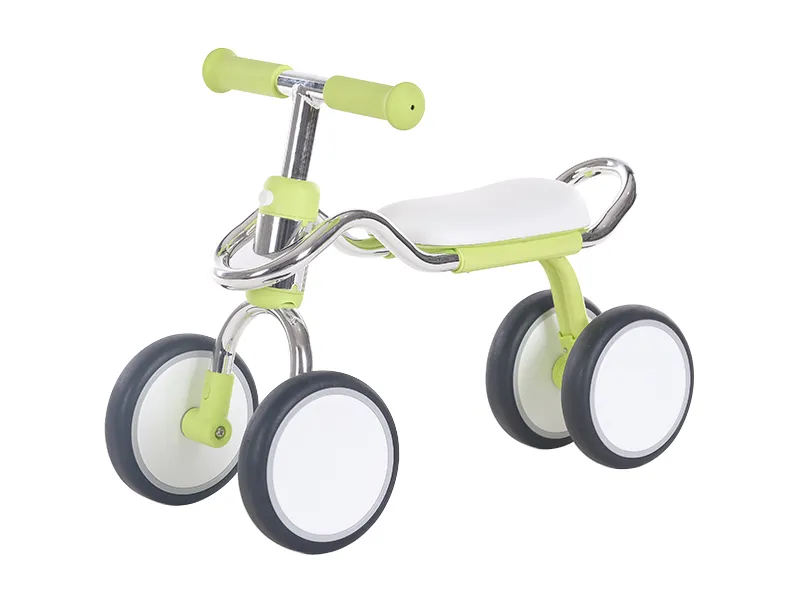
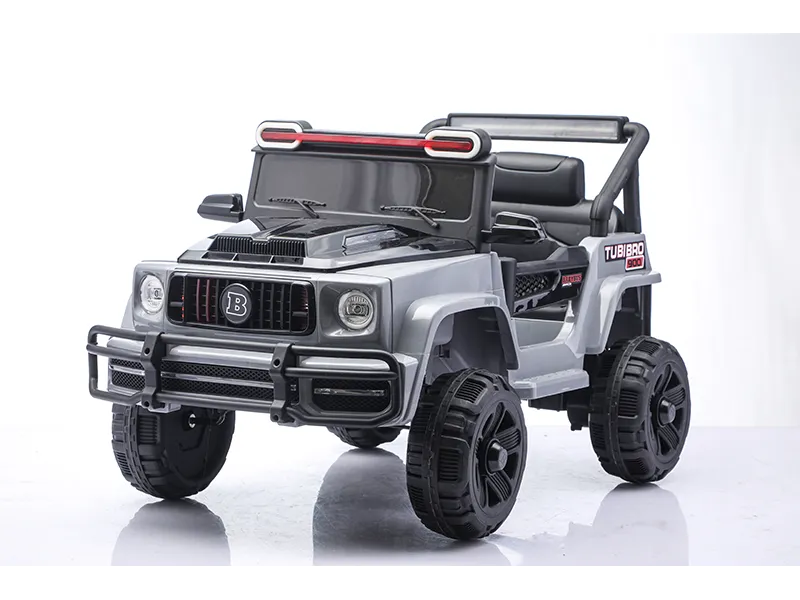
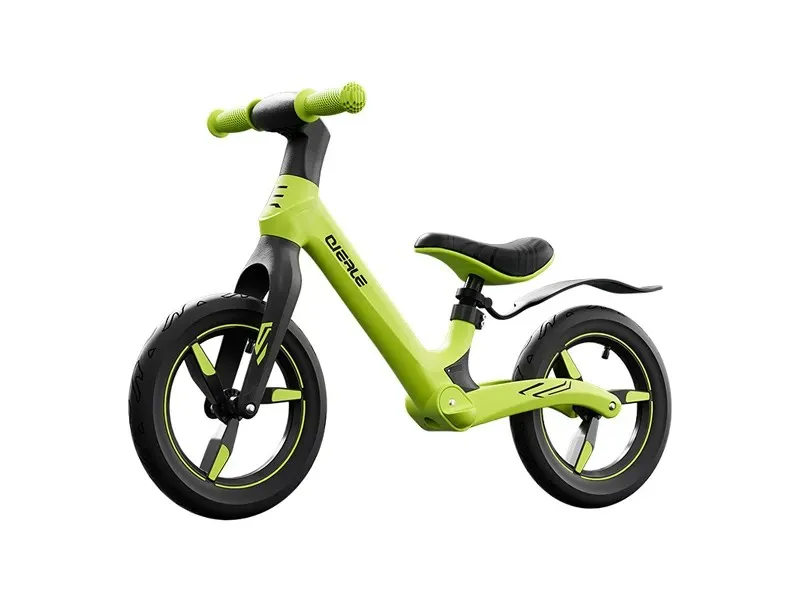
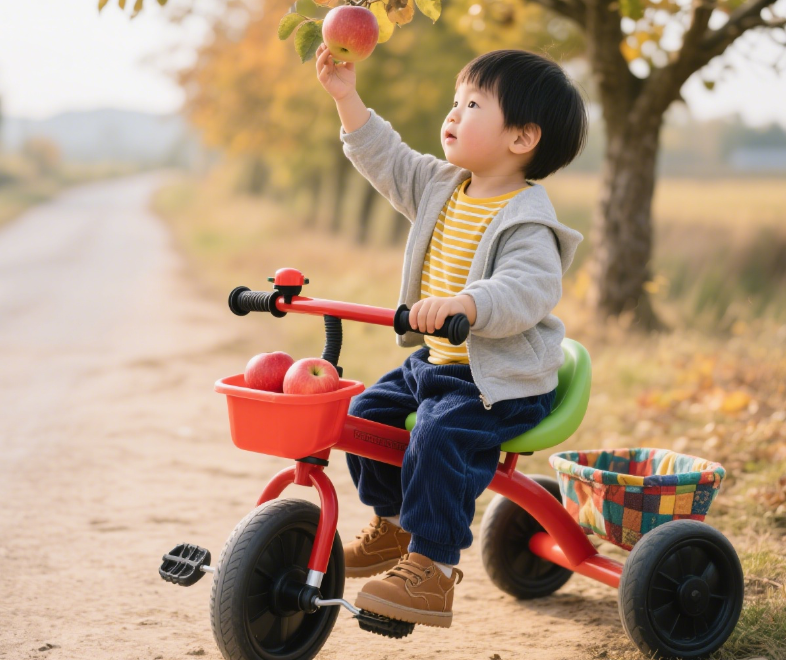
Children's tricycles, as common children's toy cars, play an important role in a baby's growth process. For young children, riding a tricycle is a quality project to promote motor development. By learning to ride a tricycle, children can not only exercise their bodies and master cycling skills but also develop balance coordination and adaptability.
Advantages of Children's Tricycles
Riding a tricycle can be seen as a form of exercise training that effectively promotes the development of a baby’s motor functions, significantly enhancing leg muscle strength and body coordination. For example, in the process of continually pedaling and steering, the child's leg muscles get exercised, and various body parts gradually learn to collaborate.
Promote Perceptual Development
Children's tricycles require children to operate them personally, which helps promote the baby’s sense of spatial awareness and enhances their ability to recognize spatial directions. When riding, children need to judge the route ahead and distinguish left from right, thereby exercising their spatial perception ability.
While playing with a tricycle, children will face various direction-changing decisions, which significantly enhances their adaptability. For instance, when encountering an obstacle ahead, the child needs to quickly react and decide whether to bypass it or stop. Over time, their adaptability will gradually improve.
Provide Better Visibility and Interaction Opportunities
Children's tricycles provide children with better visibility, making it easier for them to interact with other children. Compared to sitting in a stroller, a child on a tricycle has a wider view, can actively observe the surrounding environment, and can interact and play with peers, thereby improving social skills.
Safety and Comfort Assurance
High-quality tricycles are usually made from safe and environmentally friendly materials, with some even featuring shock absorption systems, providing a comfortable riding experience while ensuring the child's safety. For example, some tricycles have soft seats with rounded edges to avoid scratching the child, and shock absorption systems can reduce bumps, making the ride smoother.
Potential Hazards of Riding Children's Tricycles
A baby's bones are still in the developmental stage and are highly plastic, but their muscle strength is relatively weak. Riding a tricycle requires significant effort from the lower limbs, and prolonged muscle tension may adversely affect bone growth and development. For instance, excessive force may lead to leg bone bending and deformation. Therefore, it is not recommended for very young children to ride tricycles for long periods; it is generally suggested that children should be at least three years old before riding a tricycle independently.
While riding a tricycle, children are prone to head injuries or injuries to other parts of the body, which in severe cases can result in accidents like falling into a pool or crashing onto hard ground, causing serious harm. Therefore, parents must take protective measures when their children are riding tricycles, such as ensuring the child wears a helmet and choosing safe riding venues.
| Feature | Force Metre | Torque Wrench |
| Measurement Type | Push/Pull Force | Rotational Torque |
| Applications | Material testing, weight verification | Bolt tightening, assembly control |
| Output Units | Newtons (N), kg, lbs, ozf | Newton - metres (Nm), ft - lbs |
| Industry Use | Quality control, R&D | Automotive, aerospace, mechanical assembly |
Differences Between Children's Tricycles and Bicycles
The design philosophy of children's bicycles is similar to that of adult bicycles, focusing more on effort-saving, which is beneficial for babies to perform exercise training and also attracts their attention more easily. In contrast, the design of children's tricycles focuses on enhancing the stability and safety of the baby while riding, rather than on increasing speed. For example, the frame structure and drive system design of bicycles make riding relatively effort-saving, while the triangular structure design of tricycles greatly enhances stability.
In terms of performance, children's tricycles are far inferior to children's bicycles. Most of the transmission and lubrication components of children's tricycles are made of plastic, which results in poor lubrication effect and high riding resistance. In contrast, the chain transmission system and other related systems of children's bicycles make riding much smoother.
Differences in Safety Performance
Children's tricycles are superior to children's bicycles in stability and are not easy to tip over, allowing younger children to ride relatively safely. However, tricycles have a relatively short service life and may need to be replaced after one or two years of use. On the other hand, if a bicycle is properly maintained, it can be used for a relatively longer time.
Differences in Suitable Age Groups
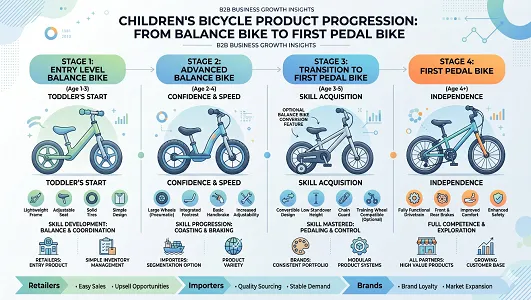
Generally speaking, children around the age of 3 can choose tricycles. At this stage, children's physical coordination and strength are gradually developing, enabling them to initially master the riding of tricycles. When a child learns to pedal and acquires a certain sense of balance, they can try riding a bicycle, which converts leg strength into wheel power through pedaling.
Analysis of Key Components of Children's Tricycles
The frames of children's tricycles are usually made of steel or aluminum. Steel frames have the advantage of being durable and strong, capable of withstanding relatively large external forces, but they are relatively heavy, which may make it difficult for younger children with insufficient strength to operate. Aluminum frames, on the other hand, are relatively lightweight and not easy to rust, but they are relatively more expensive. Parents can choose the appropriate frame material based on their children's actual situation and their own budget.
Pneumatic tires (air - filled tires) provide a smoother ride, have good shock absorption performance, can effectively reduce the sense of jolting, and bring a more comfortable riding experience to children. However, they need to be inflated regularly. Solid tires do not require inflation, so they are more convenient to use, and there is no need to worry about tire pressure issues. Nevertheless, their shock absorption performance is not as good as that of pneumatic tires. When choosing tires, it is necessary to comprehensively consider the usage scenario and the child's needs. For example, solid tires can basically meet the needs for riding on flat community roads; if the child often rides in places with more complex road conditions such as parks, pneumatic tires may be more suitable.
Plastic seats are sturdy, durable, and easy to clean, without the need to worry about problems such as liquid leakage. However, they may be less comfortable. Fabric seats, on the other hand, are more comfortable, with soft material that fits the child's body. But attention should be paid to water resistance - once soaked in water, they not only affect comfort but may also breed bacteria. Parents can choose the seat material according to their child's preferences and the usage scenario, or consider choosing a plastic seat with a detachable and washable fabric cover, which combines the advantages of both.

 English
 Español
 русский