Children's Balance Bike Race Overview
High-end children's balance bike brands are an important force in organizing children's balance bike races. They are not only title sponsors but also organizers. Currently, IP races formed around major brands include: Puky CUP, Strider CUP, Puky CBC League, Kokua CUP, Kokua Golden Autumn Event, Hilioner, PAPA club, Bike8 CUP, CUBHO CUP, etc. Among them, Puky, Strider, and Kokua restrict participants to use only their own brand bikes for the race.
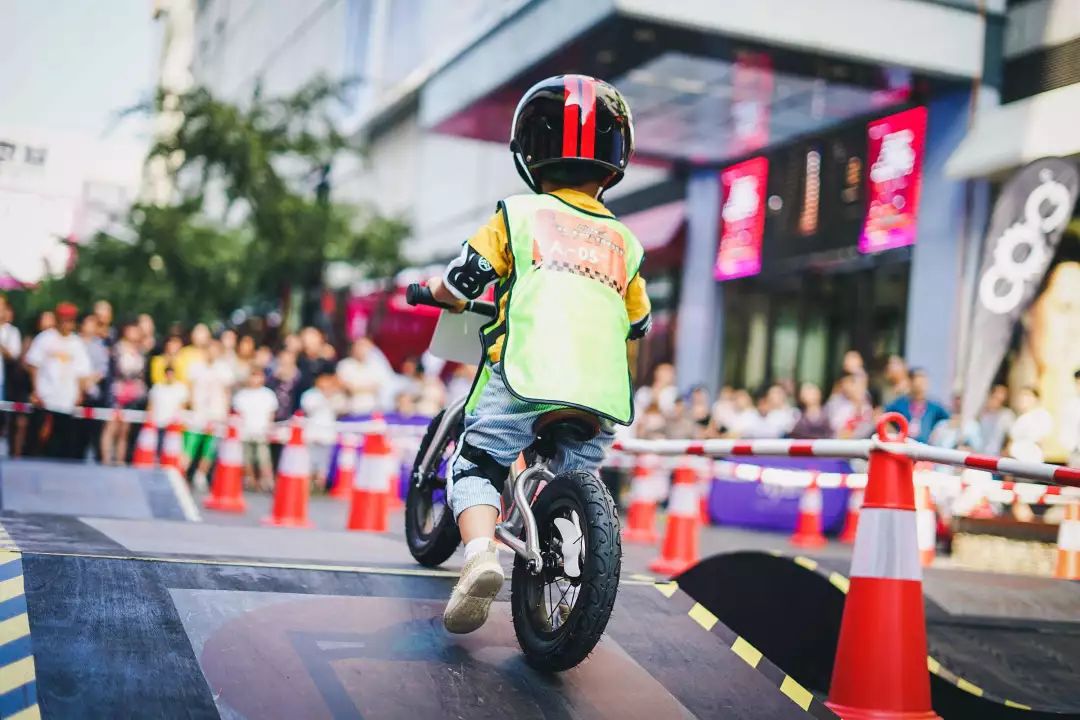
Children's Balance Bike Races Across the Country, Mostly Organized by Clubs
From the distribution of the events, children's balance bike races have a very wide reach. Various experience races, challenge races, fun obstacle races, and fun off-road races are very popular in China's large, medium, and small cities. Take the PUKY CBC League as an example: in 2018, the PUKY CBC League covered more than 50 cities nationwide, with nearly 70 events, attracting over ten thousand children participants.
Children's balance bike events are primarily organized and managed by clubs, with a high degree of commercialization. According to Tiyin Think Tank's statistics from the official announcements of the 2019 PUKY CBC League East China Division First Stop (Shanghai), North China Division First Stop (Tianjin Binhai), Central South Division Fourth Stop (Wuhan), Central Plains Division Third Stop (Hebi), Southwest Division First Stop (Chengdu), South China Division First Stop (Haikou), there were a total of 115 balance bike clubs participating as organizers, co-organizers, or assisting in the 2019 PUKY CBC League. Currently, PUKY has already formed a relatively mature nationwide league system. Qualifiers from the preliminary rounds in eight regions advance to the year-end finals, forming a relatively dense regional league club organizational network.
The Specifications of Children's Balance Bike Races
Children's balance bike races are divided into various types such as experience races, parent-child races, speed races, obstacle races, and off-road races. The length of the tracks: 120-200M for ages 2-3, 200-300M for ages 3 and above. The participating age range is 2-7 years, following a trial round-robin system with small age group divisions. The scale of children's balance bike races varies, with small events having about 50 children and large events reaching up to 500 children. The registration fee for children's balance bike races ranges from 0 to 500 yuan.
Analysis of Children's Balance Bike Race Operations
After analysis and summarization, Tiyin Think Tank has identified several characteristics of children's balance bike race operations:
The operation of children's balance bike races generally adopts a club membership system. The organizers are mostly balance bike brand owners. Parents purchase balance bikes for their children, becoming club members, participating in the club's daily activities, regional events, and even national exchange races.
High-end children's balance bikes do not have an advantage in the Chinese market. Brands like Puky, Strider, and Kokua have adopted the strategy of limiting participating bike brands in IP races to directly promote the sales of their own brand bikes.
For example, the regulations for participating bikes in the 2019 PUKY CBCL Club League North China Division Sixth Stop (Beijing) were:
1. Participating bikes must be genuine PUKY or MINIPY authorized vehicles, with at least two of the following: a Chinese manual, CCC mark, or purchase proof;
2. PUKY vehicles produced after July 2018 need to verify the bottom anti-counterfeit QR code plus one of the above three items. Participating bikes must be verified by on-site staff before being allowed to participate in the race. If the bike is not verified by on-site staff, the staff have the right to refuse the participant.
It's hard to make money from the races alone. The best outcome for a large children's balance bike race is to break even, but most races actually operate at a loss. The value of the events lies in increasing the brand and club's influence and popularity, discovering potential customers for children's balance bikes. Clubs use race events to increase member loyalty, promote bike sales, modification services, and training courses.
Future Prospects for Children's Balance Bike
1. The Market is Becoming More Mature, Accelerating the Elimination of Inferior Products
Children's balance bikes are a new emerging sports industry with a short development time but rapid growth. From first to fourth tier cities, large, medium, small and micro enterprises, various merchants are entering the market. The products are of varying quality, and children's balance bike clubs are mushrooming everywhere, with event activities in full swing.
In the next few years, the number of children's balance bike clubs and products in China will continue to increase, while some existing products will be eliminated. As the market continues to mature, consumers will become more rational. The operational ability of clubs, product quality, and innovation will be tested. The qualitative improvement will surpass the quantitative increase, and the entire children's balance bike market will present a survival of the fittest scenario.
2. Multi-party Participation in Management, Promoting Industry Standards
The newly emerging products, largely introduced by foreign brands such as PUKY, control a significant portion of the standards and operational rules for children's balance bikes.
The primary audience for children's balance bikes is pre-school children, which coincides with early education age, posing both market opportunities and control challenges. Currently, there are no specific regulations or dedicated children's balance bike sports associations in China. Some cities like Shanghai and Shenzhen classify children's balance bike projects under extreme sports associations.
As the children's balance bike market continues to develop, in addition to professional clubs, related government and private organizations, associations, and schools will also participate, making the market more diverse and further prompting the introduction of policies, regulations, and standard norms.
3. Product Innovation
Coexistence of Large Brands and Small Enterprises. Large brands, with their core technology in balance bikes, IP races, club resources, etc., will continue to dominate a large part of the children's balance bike market. The market will also differentiate, with high-end products pursuing professional development and mid-range products becoming more popular.
For ordinary children in China, high-end brand balance bikes are at a price disadvantage. Although they have successfully captured the market through IP races and brand restrictions in events, they will face the issue of product user upgrades.
Balance bikes are not a lifelong activity. Balance bike players can upgrade to bicycle players. What else can they upgrade to? Will it be a combination of activities or something else? What new playstyles will emerge in the future? Accompanying user upgrades and product iteration, new and exquisite, and beautifully designed products may appear in the market in terms of soft supporting services and product creativity for children's balance bikes. Large brands and small creative service enterprises will coexist for a long time.

 English
 Español
 русский