In the children's sports equipment market, children's scooters and balance bikes are popular choices. They each have their own characteristics and are suitable for different scenarios and needs. This article will elaborate on these two types of children's sports equipment in detail, including their definitions, selection criteria, and comparisons, to provide parents with comprehensive purchasing references.
Definitions of Children's Scooters and Balance Bikes
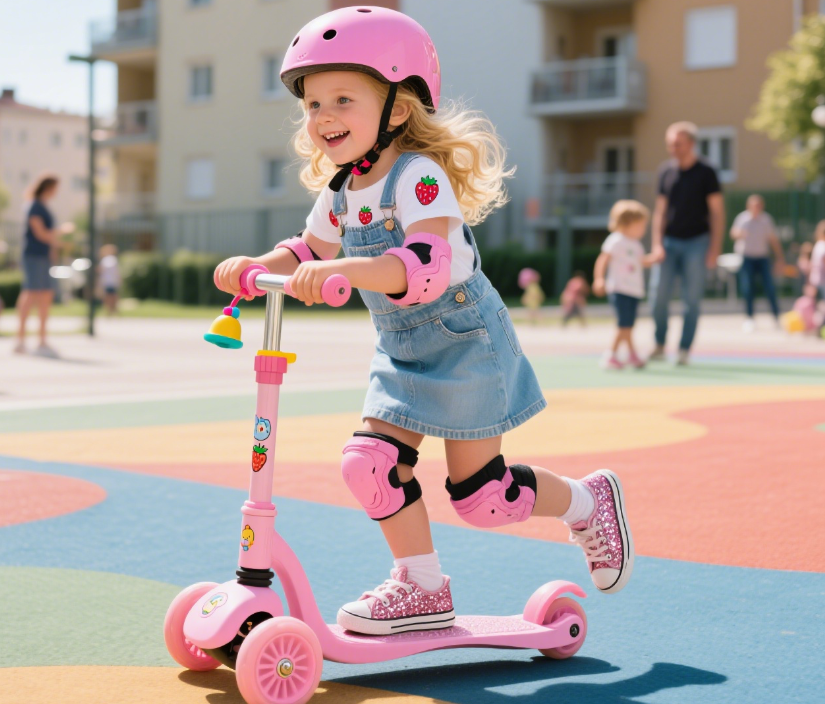
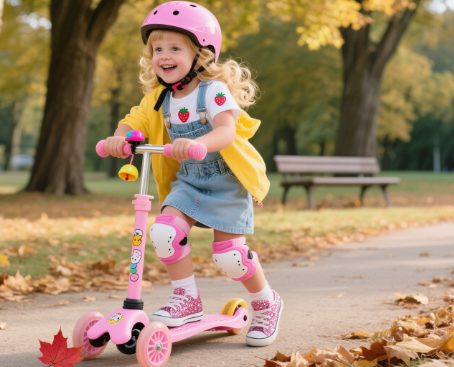
Children's scooters are small platforms with two or more wheels that rely on the user kicking the ground to move forward. Nowadays, three-wheeled scooters are common and come with features such as one-click folding and multi-functional modes.
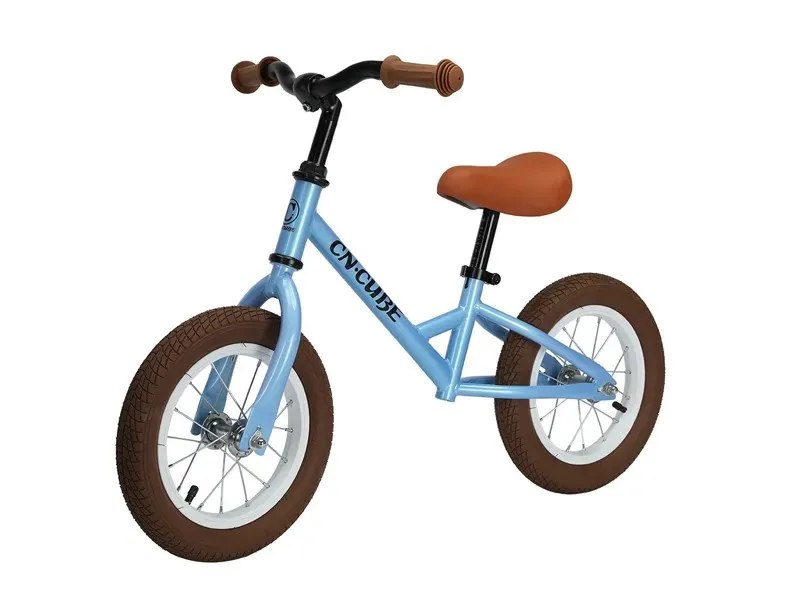
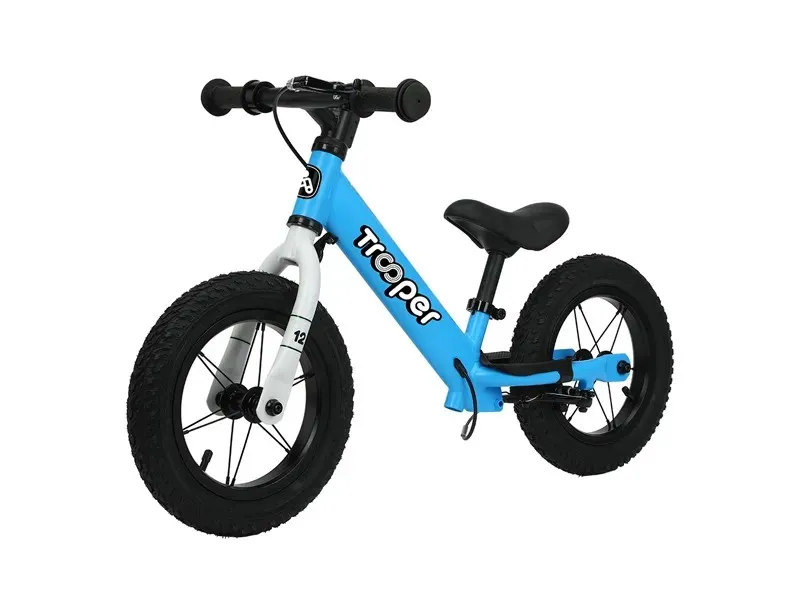
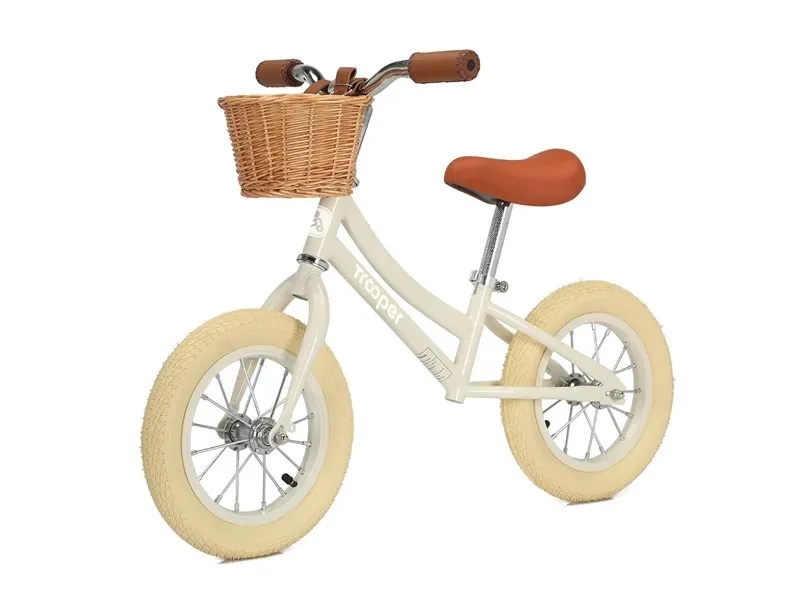
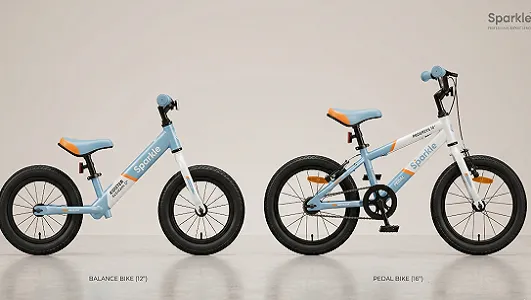
Children's balance bikes differ from common bicycles mainly because they are toys for children without the tasks of commuting and long-distance riding. The most basic children's balance bike has only a frame, handlebars, seat, and two wheels. It is suitable for children over 24 months. The balance bike has no pedals, a low frame, and gains speed and balance by pushing off the ground with feet. The handlebars are lightweight and easy to control, making the operation flexible.
Key Points in Selecting Children's Scooters and Balance Bikes
Selection Criteria for Children's Scooters
Handlebars
The width of the handlebars should be based on the child's shoulder width, not exceeding it.
The height of the handlebars should have three levels of adjustment to accommodate height differences at different ages.
The handlebars must have anti-slip particles and be integrally formed to prevent grip covers from falling off and causing accidents.
The handlebars should swing more than 30 degrees to ensure flexible steering and easy operation.
Deck
The deck should be widened to accommodate both feet standing side by side. Narrow decks, with feet placed front and back, can pose an accident risk.
The bottom of the deck should have a full-body reinforced steel plate or lining to prevent fracture risks from plastic oxidation.
The surface of the deck should have fully or partially wrapped anti-slip particles.
Wheels
The front wheels should primarily be PU silent wheels, typically 5-6 cm wide with tires 1.3-1.5 cm thick. The wider and thicker, the higher the safety factor at the same size.
The rear wheels, being auxiliary wheels and smaller than the front, also relate to braking. It is recommended to choose PU silent wheels for the rear wheels, as plastic wheels wear out easily, increasing braking risks.
Brakes
The brakes should mainly use built-in metal springs, as plastic springs are prone to breakage. Additionally, note whether the brake contact surface with the rear wheel is fully or partially wrapped in rubber.
Foldability
Folding can be either internal dial-type or external plug-pull (or foldable) type. The internal dial-type can cause wear and tear if the insert force is too great, leading to locking issues. External plug-pull types require adult assistance or tools but may have screws or plugs that come loose when jostled, making the internal type preferable for rougher conditions.
Key Points for Choosing a Children's Balance Bike
Adjust the seat height in a timely manner according to the child's height (i.e., leg length). The seat height should be a few centimeters lower than the child's leg length, so that when the child sits on the seat, their legs are in a slightly bent state.
The size standard of an
alloy balance bike mainly refers to the tire size, with tires ranging from 10 inches to 14 inches. The mainstream size of balance bikes is 12 inches, and the seat and handlebar heights can be adjusted according to different heights. Parents only need to choose based on the baby's sitting height, overall height, and leg length.
Children's balance bikes are mainly made of steel or aluminum alloy. The frame material determines the overall weight of the balance bike, and the lighter the balance bike, the better—aluminum alloy is the preferred material.
Children's balance bikes mainly use pneumatic tires (air-filled tires) and solid tires. It is important to choose tires based on different venues, considering factors such as shock absorption, friction, and the rider's weight. Do not fully inflate pneumatic tires, as this can increase the contact area with the ground.
Currently, the shock absorption devices used on balance bikes are either springs (left) or polyurethane rubber (right). Spring shock absorption is suitable for heavier riders, mountainous areas, and venues with strong impact; polyurethane rubber shock absorption is suitable for lighter riders, indoor spaces, and venues with weak impact.
Balance bikes can move at a considerable speed, so it is necessary to choose a set of protective gear for the baby. The protective gear includes gloves, knee pads, elbow pads, and a helmet.
Comparison Between Children's Scooters and Balance Bikes
Physical Exercise
During the period when children are 2-5 years old, exercising physical development is crucial.
Children's Scooters: The child stands on one foot, uses the seat as a support point, and slides forward by alternating legs. They grip the handlebars tightly with both hands to control the direction and increase speed. The even force on both legs and hands is beneficial for the exercise and development of limb muscles and bones, helping children grow taller.
Balance Bikes: Balance bikes also have a good effect on physical exercise. However, it should be noted that from the perspective of the sliding movement of balance bikes, the baby mainly exerts force with both legs. If the standing posture and the use of leg strength are insufficient, it may lead to uncoordinated development of limb muscles and bones. Unbalanced movement practice will affect the balanced development of the body.
Balance Ability
Children's Scooters: Children ride scooters by standing, holding the handlebars with both hands, pushing one foot against the ground, and sliding forward with the other foot. Scooter exercise can strengthen the strength of thigh muscles and improve the baby's hand-eye-brain coordination. Normal vestibular and cerebellar functions are essential for maintaining body balance while standing and for the forward movement of the scooter. Therefore, scooter sports for children can well promote the development of the child's vestibular function and cerebellum.
Balance Bikes: Balance bikes have a certain auxiliary effect on balance ability, but due to their structural design, they mainly rely on the baby's leg sliding force, making it easy to struggle with maintaining balance. When learning to ride a bicycle based on this (experience), the child has to start from scratch.
Sense of Security
Children's Scooters: Children's scooters adopt a solid tire design and a stable three-wheel structure, resulting in good stability. They can be folded with one click and have a convertible mode, allowing both riding and sliding.
Balance Bikes: Due to their large wheels, fast speed, and lack of braking devices, balance bikes are prone to a series of accidents.
Experience
Children's Balance Bikes: They allow for various fancy movements such as sliding, standing, turning, and lifting the handlebars; skilled riders can show off their skills. With strong challenge, they are easy to stimulate children's interest, enhance their courage and mental capacity, and help them realize their unlimited potential. Relatively speaking, children's balance bikes are more suitable for "trendy kids" who enjoy urban life and outdoor activities.
Children's Scooters: Riding a scooter is indeed cool, but at the same time, its small wheels and low chassis make it more suitable for flat urban road conditions, not for slightly complex road conditions in suburban natural environments such as gravel, grass, and small ridges. Riding a scooter is more like the style of "street teenagers".
Other Aspects
| Aspect | Children's Scooters | Children's Balance Bikes |
| Price | Relatively affordable; a suitable children's scooter can be bought for around 100 yuan. | Relatively expensive; the starting price is at least 2,000 yuan, which may not be the first choice for families with limited budgets. |
| Ease of Operation | Easier for children to learn; due to better balance, children can master basic sliding skills in a short time. | Though easier for adults to control, it is relatively more difficult for children to learn, as it requires a certain sense of balance and coordination. |
| Safety | Relatively safe; the speed is slower, and children can easily maintain balance during use. | Prone to accidents if not controlled properly; especially for children whose sense of balance and coordination are not fully developed, there are certain safety risks in using balance bikes. |
| Suitable Roads | Require relatively flat roads to ride on. | Have lower requirements for road conditions. |
| Impact on Learning to Ride a Bicycle | Although both scooters and balance bikes can help babies exercise balance, scooters mainly rely on the baby's single-leg sliding force, which easily leads to uneven force on both legs. Children usually have to start from scratch when learning to ride a bicycle. | Balance bikes require the baby to hold the handlebars with both hands, step on the ground with both feet, and push forward simultaneously or alternately with both feet. This makes it easier for children to learn to ride a bicycle based on this experience. |

 English
 Español
 русский