What Size Balance Bike Does a 2-Year-Old Need?
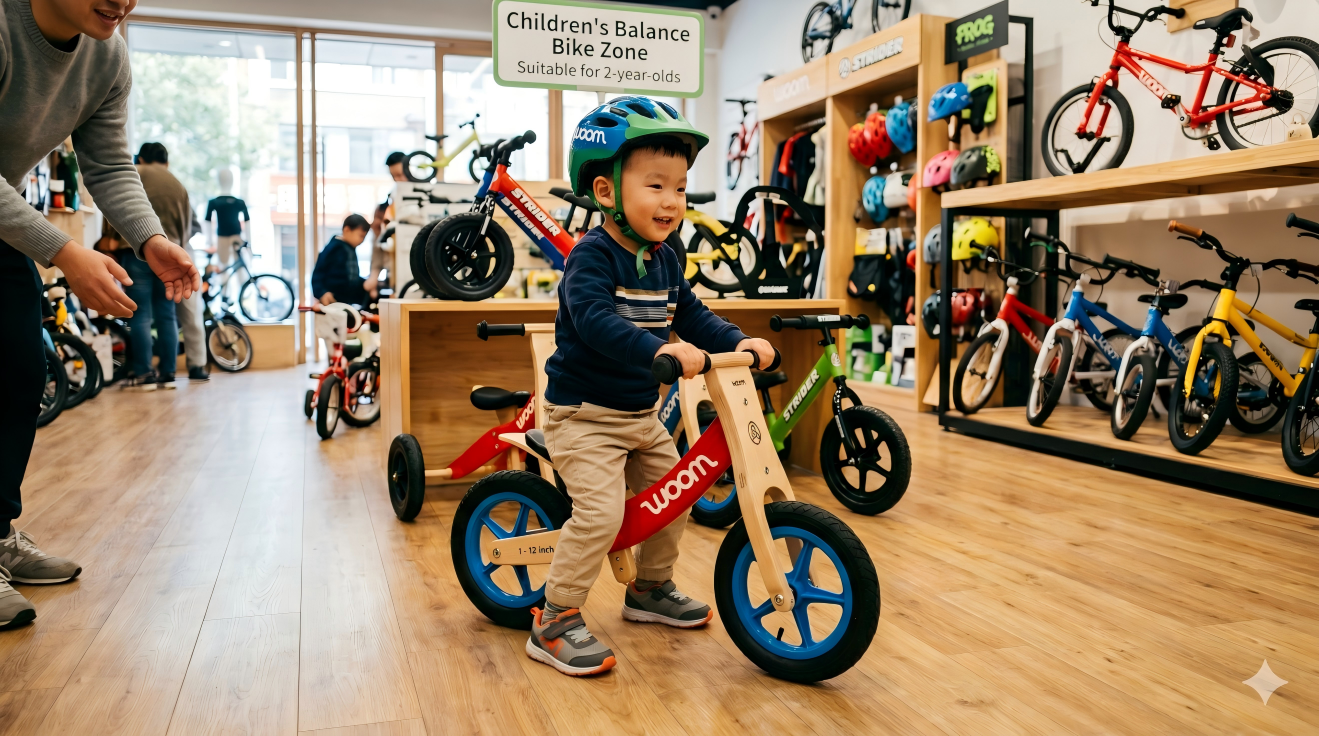
If you're asking what size balance bike a 2-year-old needs, the best place to start is fit, not age alone. For many children this age, a 12-inch balance bike is a common starting point, but that does not automatically mean it is the right fit. What matters more is whether the child can sit comfortably, place both feet flat on the ground, and feel in control from the very beginning. Official sizing guides consistently put inseam and minimum seat height ahead of age when helping parents choose the right bike.
A good beginner setup usually allows the child to sit low enough to push, stop, and steady themselves easily. One official sizing guide recommends a minimum seat height about an inch lower than the child’s inseam so both feet can stay flat on the ground with a slight bend in the knees. That is a much more useful rule than simply picking a bike labeled “for ages 2 and up.”
So even if two children are both 2 years old, they may not need the same bike size. One may fit comfortably on a typical 12-inch model, while another may still need a lower and more beginner-friendly option. That is why the better question is not “What do most 2-year-olds ride?” but “What will fit this child well from day one?”
The Short Answer
If you want the simplest practical answer, start with these four checks:
measure the child’s inseam
compare it with the bike’s minimum seat height
make sure the child can keep both feet flat on the ground
choose a bike that feels easy to control from the first ride
This approach reflects how official sizing guides explain toddler bike fit. Age can help narrow the category, but inseam and seat height do the real work when it comes to deciding whether the bike will actually fit.
For many 2-year-olds, that often leads buyers toward the 12-inch balance bike category. But even within that category, seat ranges and frame geometry can vary quite a bit. In other words, wheel size gives you a starting point, not a final answer.
Why Age Alone Is Not Enough
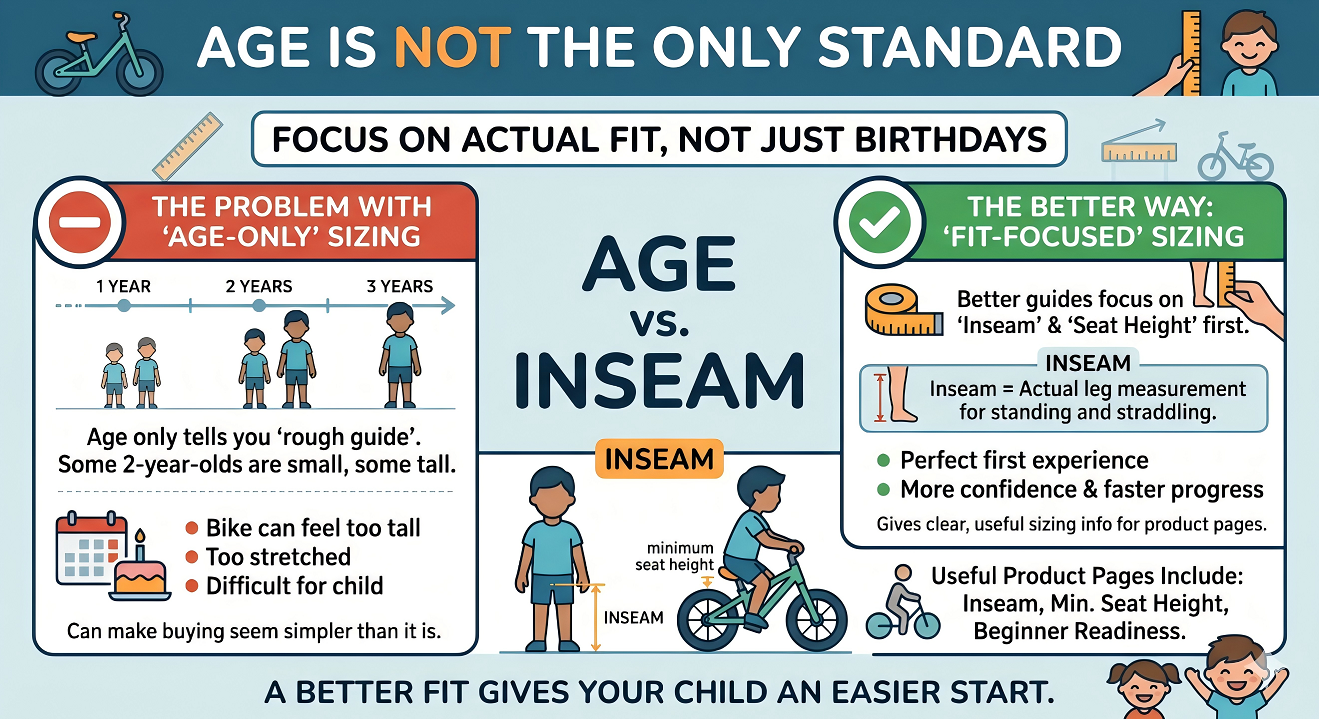
Age is useful as a rough guide, but it does not tell you enough about actual fit. Some 2-year-olds are small for their age, some are tall, and some are physically ready for a more active two-wheel riding posture sooner than others. That is exactly why better sizing guides focus first on inseam and seat height instead of relying on birthday alone.
The problem with age-only sizing is that it can make the buying process look simpler than it really is. A bike can be labeled for a certain age group and still feel too tall, too stretched, or too difficult for the child using it. For a beginner, that usually means less confidence and slower progress. A better fit gives the child a much easier first experience.
For brands and sellers, this matters because clearer sizing information makes product pages more useful. Instead of only saying a model is “for 2-year-olds,” it is much more helpful to explain the fit in terms of inseam, minimum seat height, and beginner readiness. That kind of sizing language is closer to how good official guides already present the category.
How to Measure a 2-Year-Old for a Balance Bike
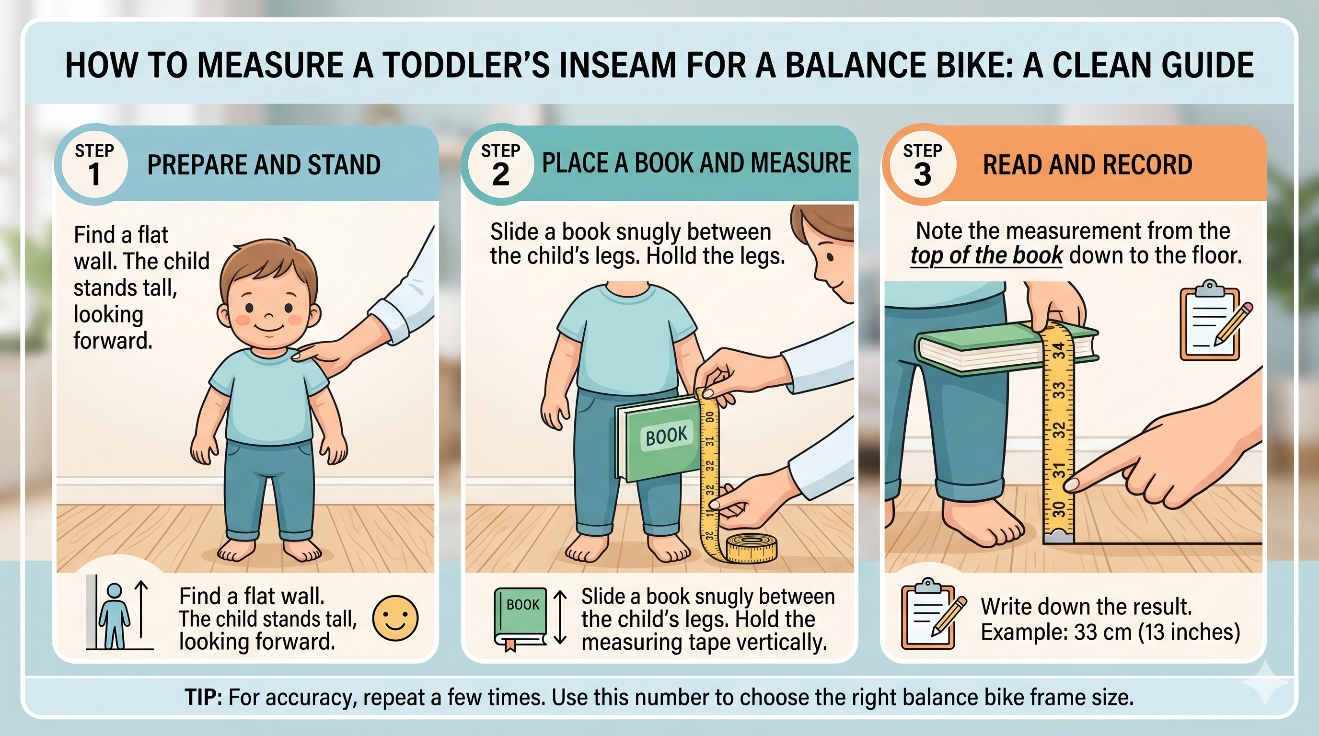
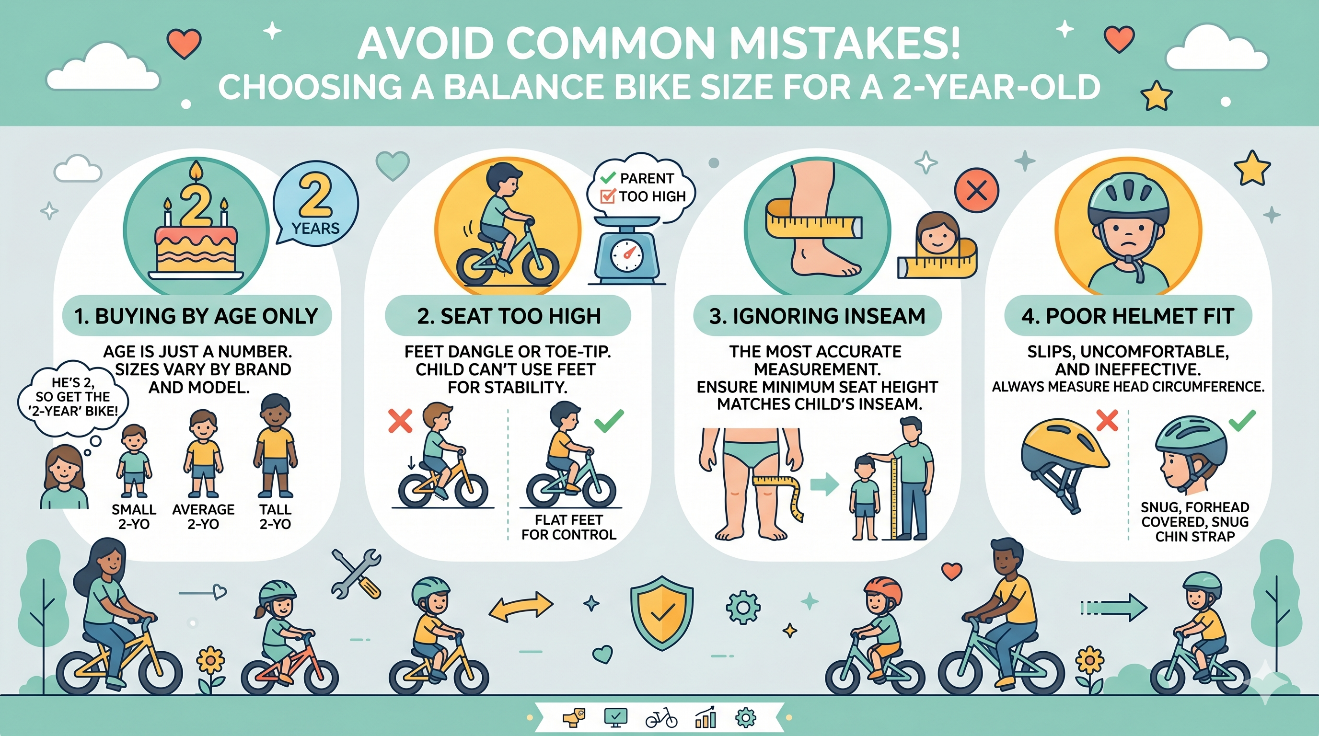
The most useful measurement is the child’s inseam, which is the distance from the floor to the crotch. One official method is to have the child stand straight with shoes on, place a book between the legs like a saddle, and measure from the top of the book down to the ground. This gives you a much better idea of what seat height will work than age alone ever can.
Once you have that measurement, compare it with the bike’s minimum seat height. For beginner balance bike riders, the seat should usually be low enough that both feet stay flat on the ground with a slight bend in the knees. That setup helps the child push off, stop, and steady themselves without feeling stretched or unstable.
This is one of the easiest ways to avoid buying a bike that looks right online but feels too big in real use. If the child cannot sit comfortably and plant both feet, the bike is probably not the right starting fit yet.
What Seat Height Should You Look For?
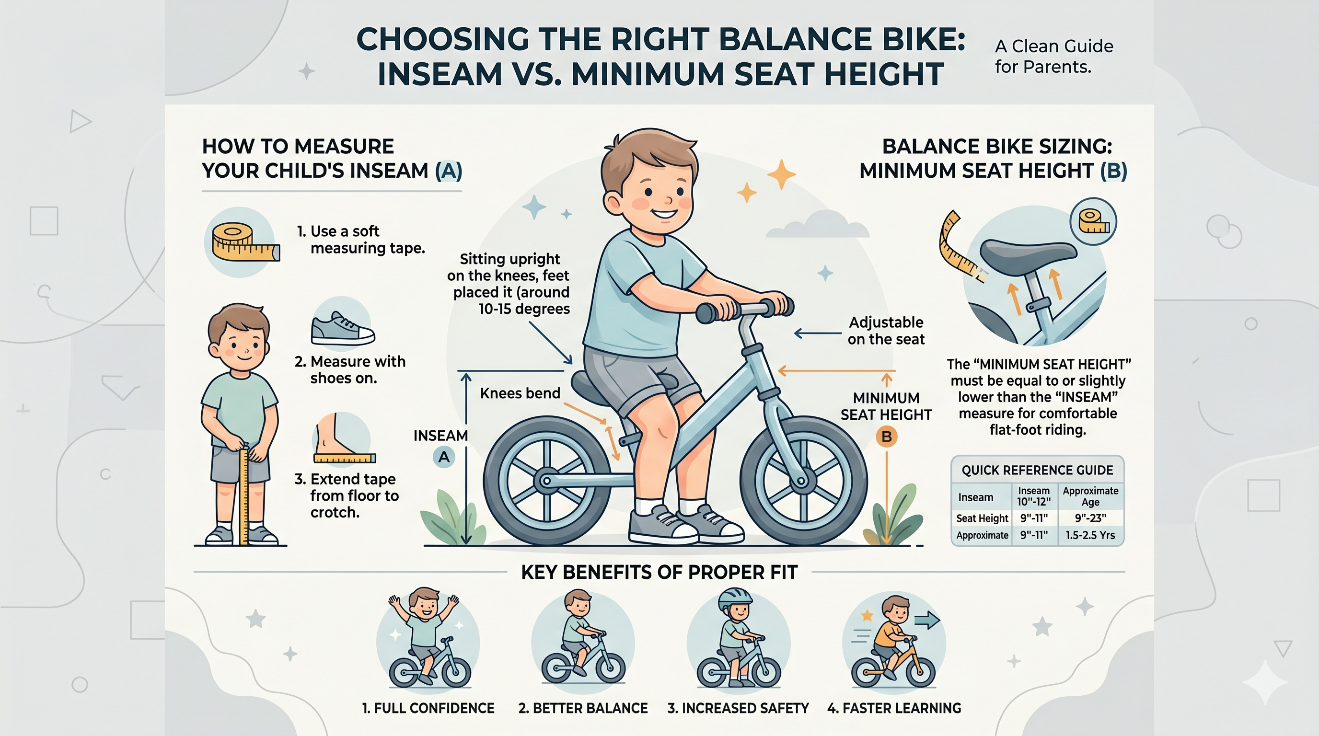
Seat height is often the detail that makes or breaks the fit. A beginner-friendly balance bike should sit low enough for the child to feel secure right away. One official guide recommends choosing a minimum seat height around an inch shorter than the child’s inseam, which helps keep both feet flat on the ground and makes early riding easier to control.
This matters even more for 2-year-olds because early confidence is usually more important than buying extra room for later. A bike that is too tall may seem like better value at first, but it often makes the first rides harder than they need to be. Better fit now usually matters more than extra growth room later.
It is also worth checking the bike’s maximum seat height, especially if you want some room for growth. Two bikes in the same wheel category can still fit very differently if their saddle range and frame design are not the same. That is why seat height tells you more than wheel size alone.
A practical order of priority looks like this:
inseam first
minimum seat height second
maximum seat height third
age only as a general reference
Is a 12-Inch Balance Bike Right for a 2-Year-Old?
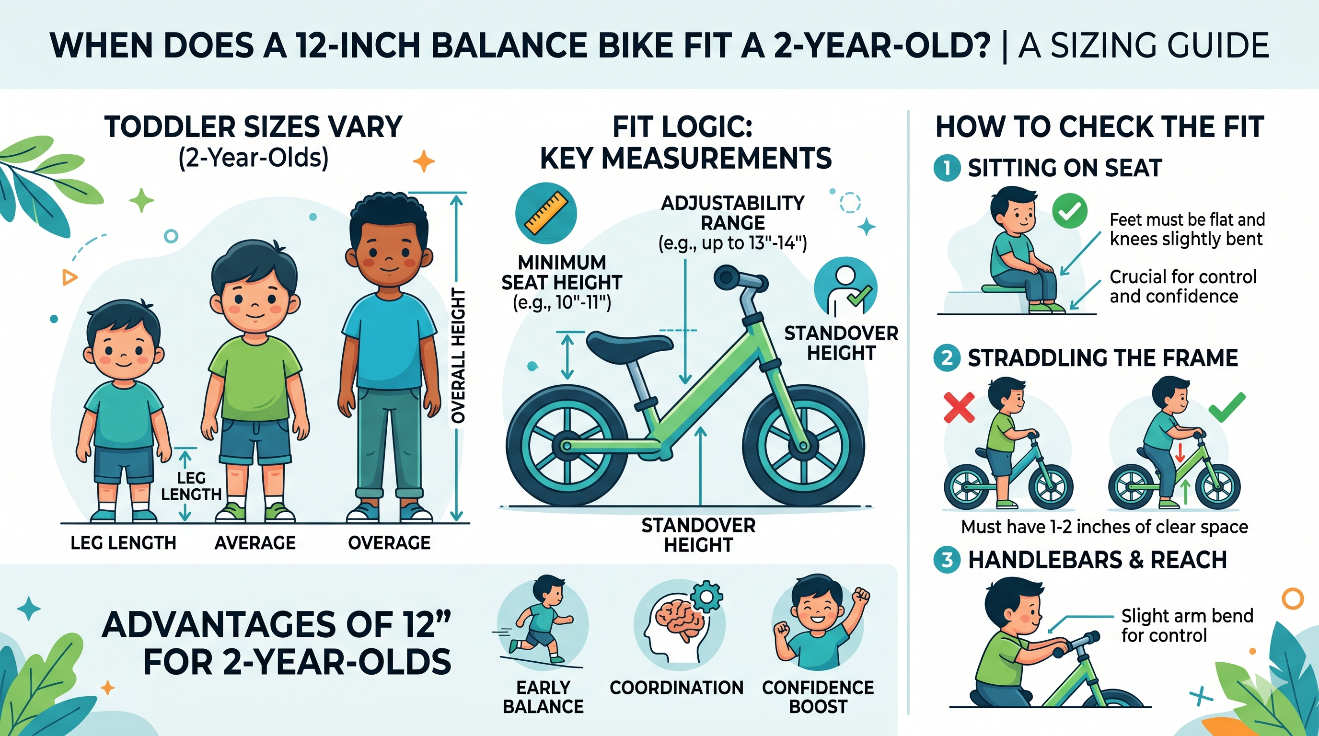
In many cases, yes. A 12-inch balance bike is a very common starting point for this age. Official sizing tables from one major balance-bike brand show several 12-inch models aimed at roughly the 2 to 4 age range, with minimum inside leg and seat-height requirements that vary by model.
But wheel size on its own still does not tell you enough. Two 12-inch balance bikes can fit very differently if the frame shape, saddle range, or overall geometry is not the same. That is why a 12-inch bike can be a good category choice without automatically being the right fit for every 2-year-old.
So if someone asks, “Does a 2-year-old need a 12-inch balance bike?” the better answer is: often yes, but only if the inseam and seat height line up properly. Wheel size helps you narrow the options, but fit is what makes the final decision.
Common Sizing Mistakes Parents and Buyers Make
One of the most common mistakes is choosing a bike by age alone. That sounds convenient, but it often leads to a poor fit. Inseam and minimum seat height give a much clearer picture of whether a balance bike will work well for a beginner.
Another mistake is buying a bike that is too tall because it seems like the child will “grow into it.” Pediatric bike-safety guidance specifically warns against buying a larger bike for a child to grow into, and it also recommends choosing a bike that allows the child to sit on the seat and touch both feet to the ground.
A third mistake is ignoring helmet fit. The American Academy of Pediatrics’ HealthyChildren guidance says children should have a properly fitted, CPSC-approved helmet that sits squarely on the head and does not slide around or tip over the eyes.
For brands and sellers, the bigger problem is vague sizing information on the product page. If the listing only gives an age range, buyers still have to guess. If it explains inseam, minimum seat height, and beginner fit, the product is much easier to understand and trust. That conclusion follows the same logic used by official sizing guides.
Final Thoughts
So, what size balance bike does a 2-year-old need?
The best answer is simple: a bike that fits the child’s inseam, has a low enough minimum seat height, and lets both feet stay flat on the ground from the first ride. That is a much more reliable way to choose than relying on age alone.
For many children, that does lead to the 12-inch category. But wheel size is only part of the picture. The better approach is to measure first, check seat height second, and use age only as a rough guide.
For parents, the goal is straightforward: choose a bike that feels easy, comfortable, and confidence-building from day one. For importers, retailers, and brands, it means sizing content should be clear, practical, and built around real fit, not just marketing age labels. Better sizing guidance does more than help buyers choose the right bike. It also makes the whole category feel more professional and easier to trust.
Also See
Balance Bike vs Tricycle: Which Is Better for Toddlers?
What Age Should a Child Start Using a Balance Bike?
Differences Between Children's Scooters and Balance Bikes

 English
 Español
 русский