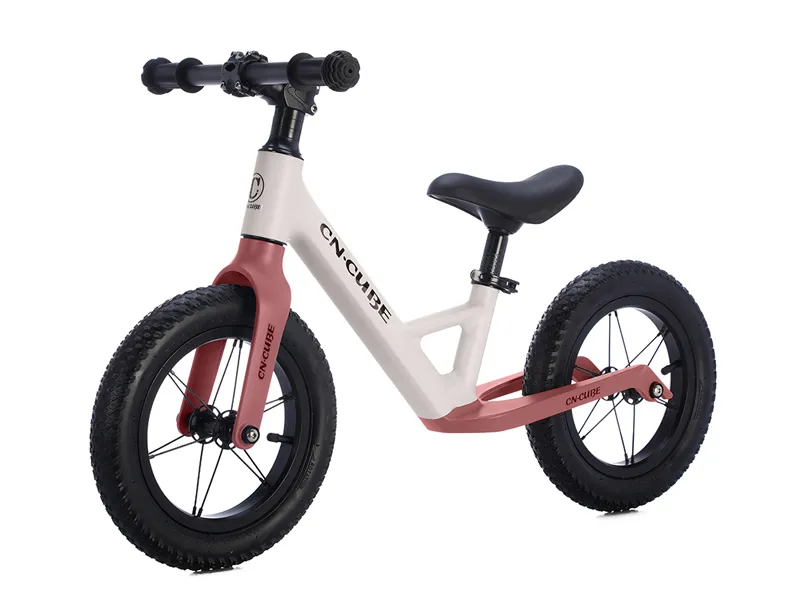
If you are asking whether balance bikes are better than training wheels, the most honest answer is: in many cases, yes — especially when the goal is to help a child feel comfortable balancing on two wheels before worrying about pedals.
That does not mean training wheels have no place. They still appeal to many families because they look familiar and seem like a simple way to make a small bike feel safer. But the two products do not teach the same thing in the same order. A balance bike helps a child get used to gliding, steering, stopping, and staying centered over the bike. Training wheels usually help a child get started with pedaling on a supported bike, but they do not teach true balance in the same direct way.
That is why more parents, retailers, and brands now see balance bikes as a stronger first step for learning to ride. The question is not just which product looks easier. The more useful question is which product helps the child build the right skill first.
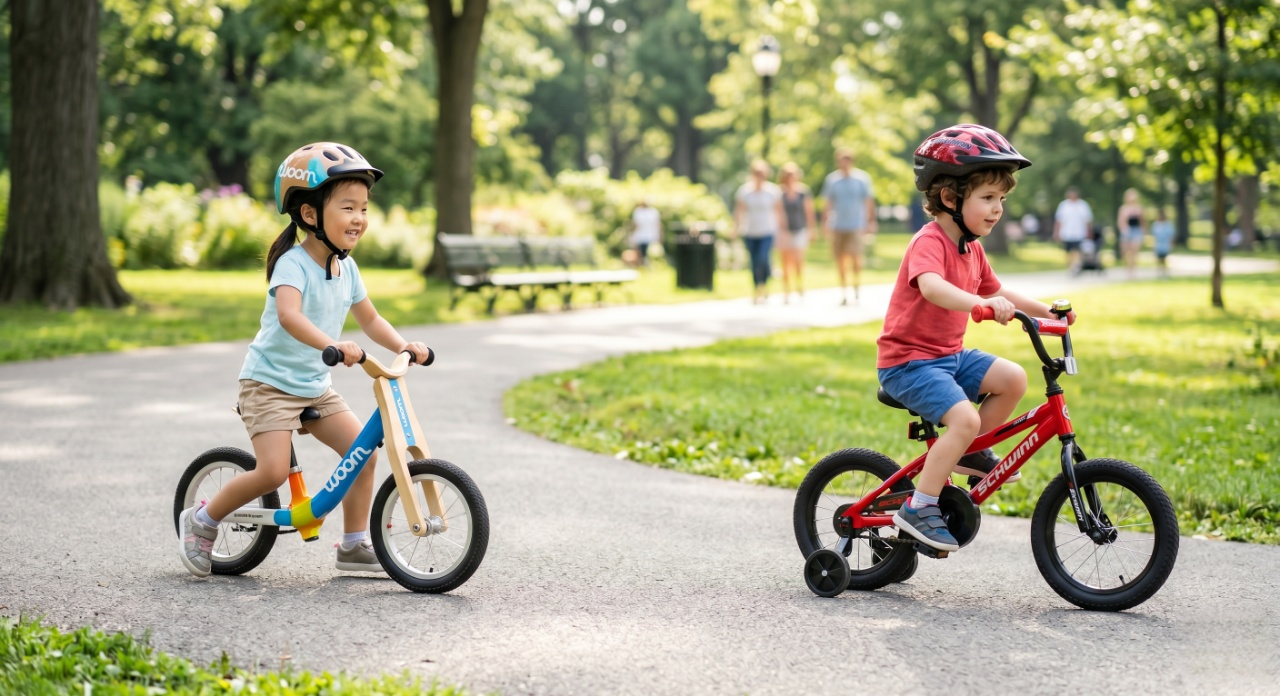
Quick Answer
Balance bikes are often better for teaching balance, steering, and riding confidence
Training wheels are often better for helping a child get used to pedals and basic forward motion
If the goal is a smoother transition to a regular pedal bike, balance bikes often have the advantage
If the goal is to sell into a market that still prefers the traditional “small bike with support wheels” format, training wheels can still make commercial sense
Balance bikes are usually better than training wheels when the main goal is to teach a child balance, steering, gliding, and riding confidence. Training wheels are still useful when the goal is to introduce pedaling first or sell a familiar beginner-bike format in traditional retail channels.
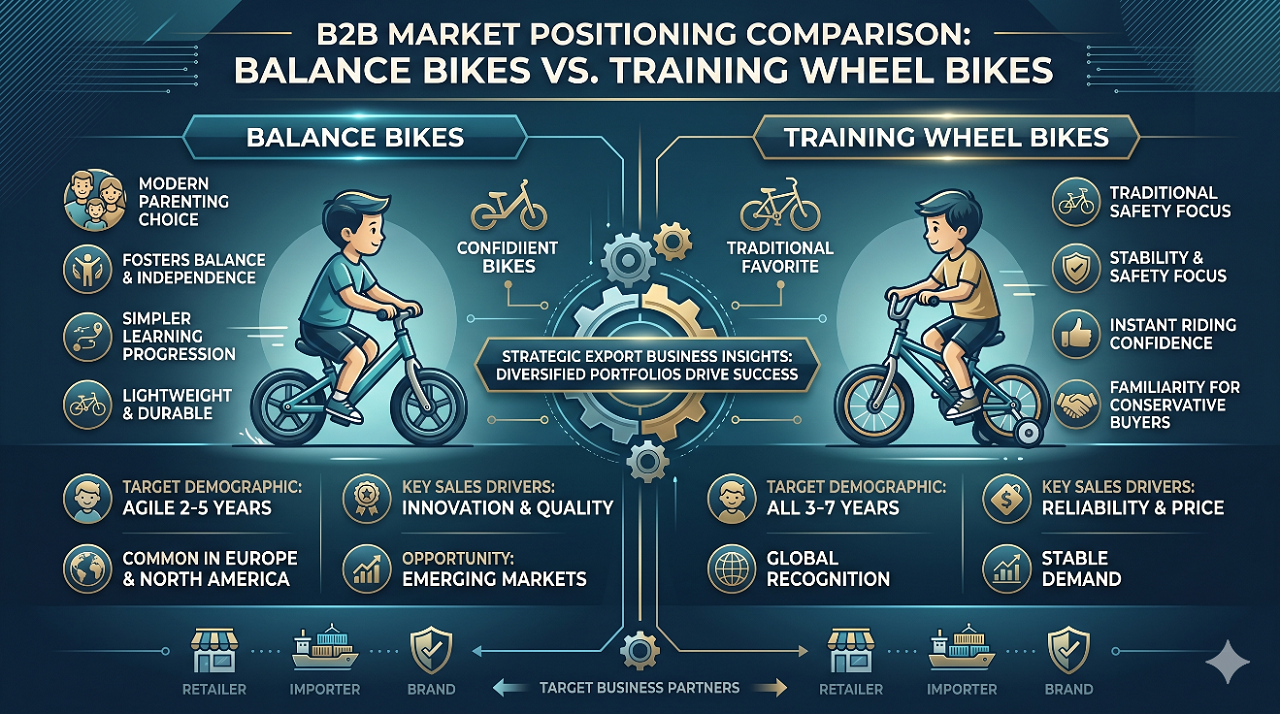
For B2B buyers, balance bikes are often stronger as a first-riding product, while bikes with training wheels can still work well as entry-level pedal-bike products for markets that prefer a conventional bicycle look.
Balance Bikes vs Training Wheels: Key Differences
Balance bikes and bikes with training wheels are both designed for young beginners, but they support different stages of the riding journey. A balance bike helps children focus first on balance, steering, gliding, braking, and body control. Without pedals, children can use their feet to push, slow down, and stop, which often makes the learning process feel more natural and less intimidating.
A bike with training wheels offers a more traditional beginner-bike experience. It introduces children to pedaling, sitting on a bicycle frame, and moving forward with support on both sides. However, because the support wheels keep the bike upright, children may not develop real balance as early as they would on a balance bike.
For importers, retailers, and children’s bike brands, the key difference is product positioning. Balance bikes are usually stronger as “first riding skill” products, while training-wheel bikes work well as beginner pedal bikes for families who prefer a familiar bicycle format. Understanding this difference helps brands create clearer product pages, catalogs, and sales messages.
Need help choosing between balance bikes and training-wheel bikes for your market? Contact Sparkle Rides for product-line recommendations.
Comparison Table: Balance Bikes vs Training Wheels
| Comparison Point | Balance Bikes | Bikes with Training Wheels |
| Main learning focus | Balance, steering, gliding, and confidence | Pedaling and supported riding |
| Riding support | Children control movement with their feet | Side wheels keep the bike upright |
| Transition to pedal bikes | Usually smoother after balance is learned | May require relearning balance later |
| Product positioning | First riding experience before pedals | Beginner pedal-bike experience |
| Retail appeal | Modern, lightweight, skill-building | Familiar, gift-friendly, traditional |
| Best for | Toddlers and early riders | Children ready to try pedals |
| Key selling points | Lightweight frame, adjustable seat, easy control | Pedal practice, stable support, removable wheels |
Need help choosing between balance bikes and training-wheel bikes for your market? Work with Sparkle Rides, a balance bike factory offering OEM/ODM product-line recommendation.
What Training Wheels Help a Child Learn?
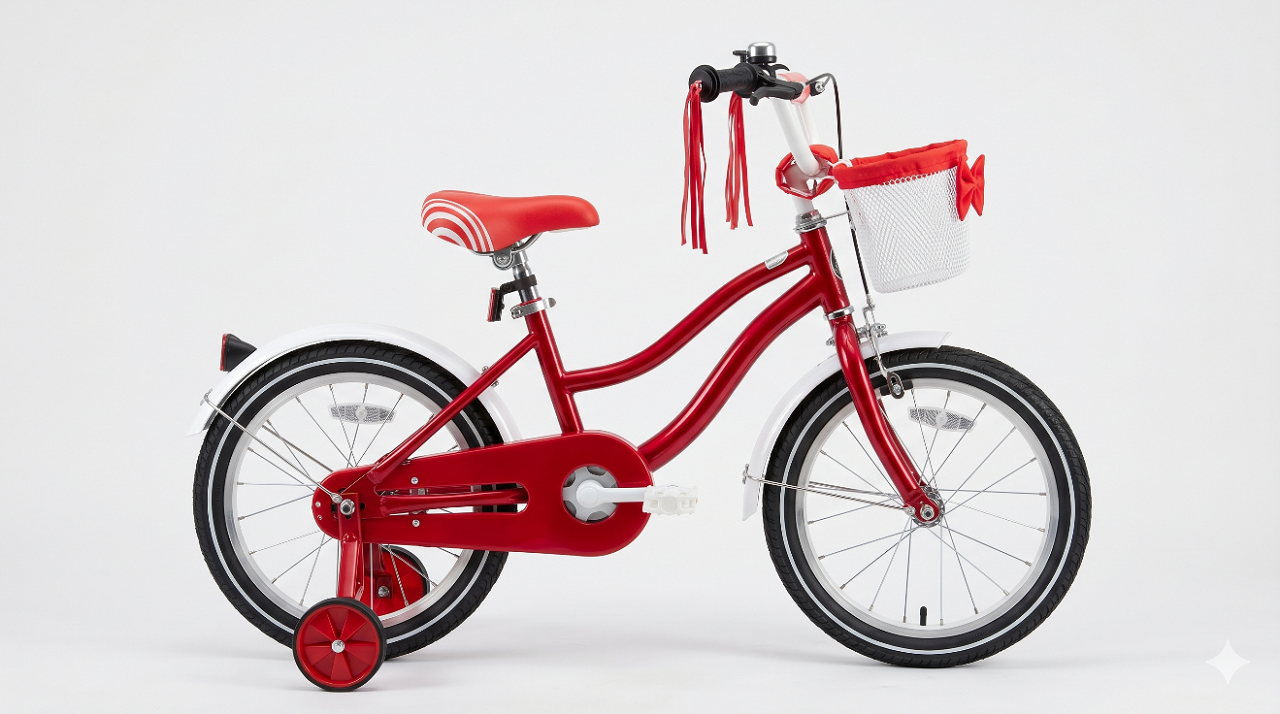
Training wheels are popular because they make a small pedal bike feel more stable at low speed. For many parents, that feels reassuring. The child can sit on a bike, place their feet on the pedals, and begin to understand how pedaling moves the bike forward.
That is the main strength of training wheels: they introduce the child to:
This is why training wheels still sell well in many traditional retail channels. They are easy to understand, easy to explain, and familiar to grandparents, gift buyers, and parents who learned that way themselves.
But the limitation is just as important. A child riding with training wheels may learn how to pedal, but that does not automatically mean they are learning how to balance naturally on two wheels. In fact, one reason the later transition can feel harder is that balance still has to be learned after the child is already used to supported riding.
.png "child riding a bike with training wheels")
What Balance Bikes Help a Child Learn?
A balance bike starts from a different idea. Instead of asking the child to pedal first, it lets them focus on the harder and more fundamental part of riding: balance and control.
With a balance bike, the child learns to:
This matters because balance is usually what makes riding feel difficult at the beginning. Once a child becomes comfortable gliding and controlling direction, adding pedals later often feels much less intimidating.
That is one reason balance bikes have become so important in the kids’ riding category. They give parents a clearer answer to the question, “How can my child learn to ride with more confidence?” They also give brands and retailers a stronger product story around skill development, not just early mobility.
From a product-positioning point of view, balance bikes are especially strong when the sales message focuses on:
Why Many Parents Prefer Balance Bikes Today?
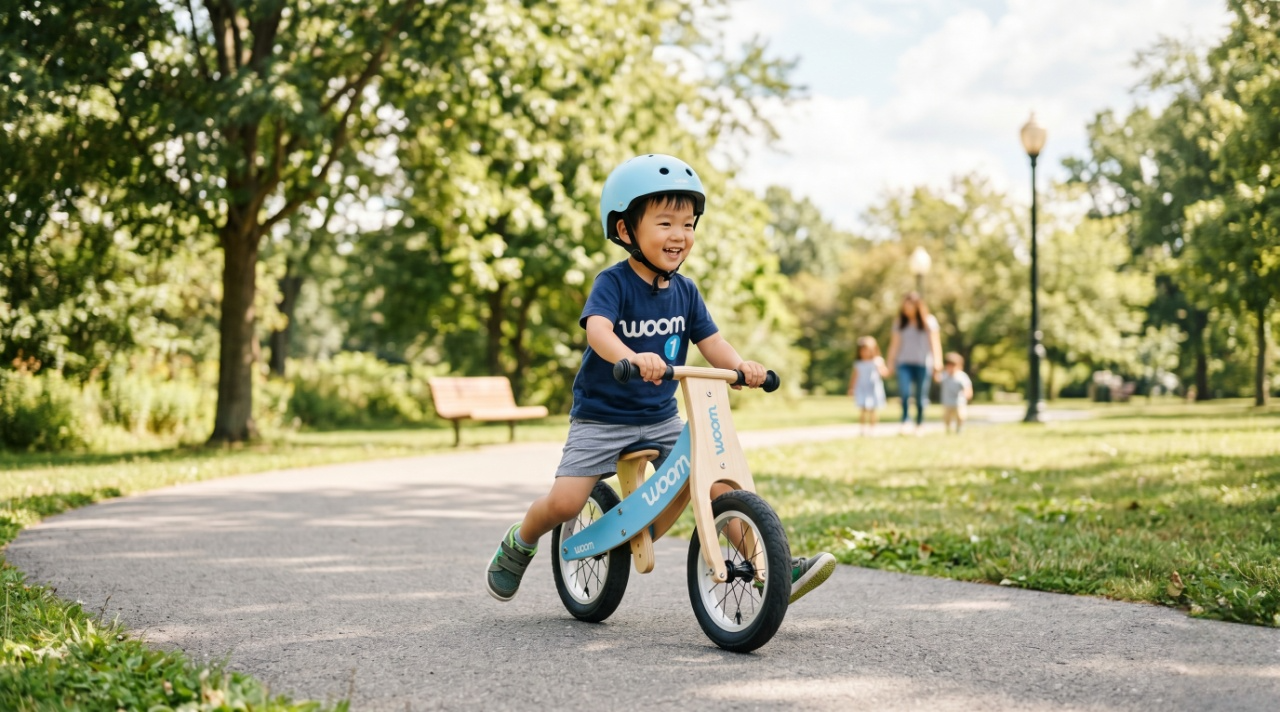
Many parents now prefer balance bikes because they feel more natural as a first learning step. Instead of teaching a child to rely on side support, the child begins by learning how their body works with the bike.
That often changes the learning experience in three important ways.
First, the child usually feels more in control because both feet can stay close to the ground. That makes starting and stopping less stressful.
Second, the learning process often looks more natural. The child pushes, coasts, and gradually becomes comfortable lifting the feet for short glides. It does not feel like a sudden jump from “fully supported” to “fully unsupported.”
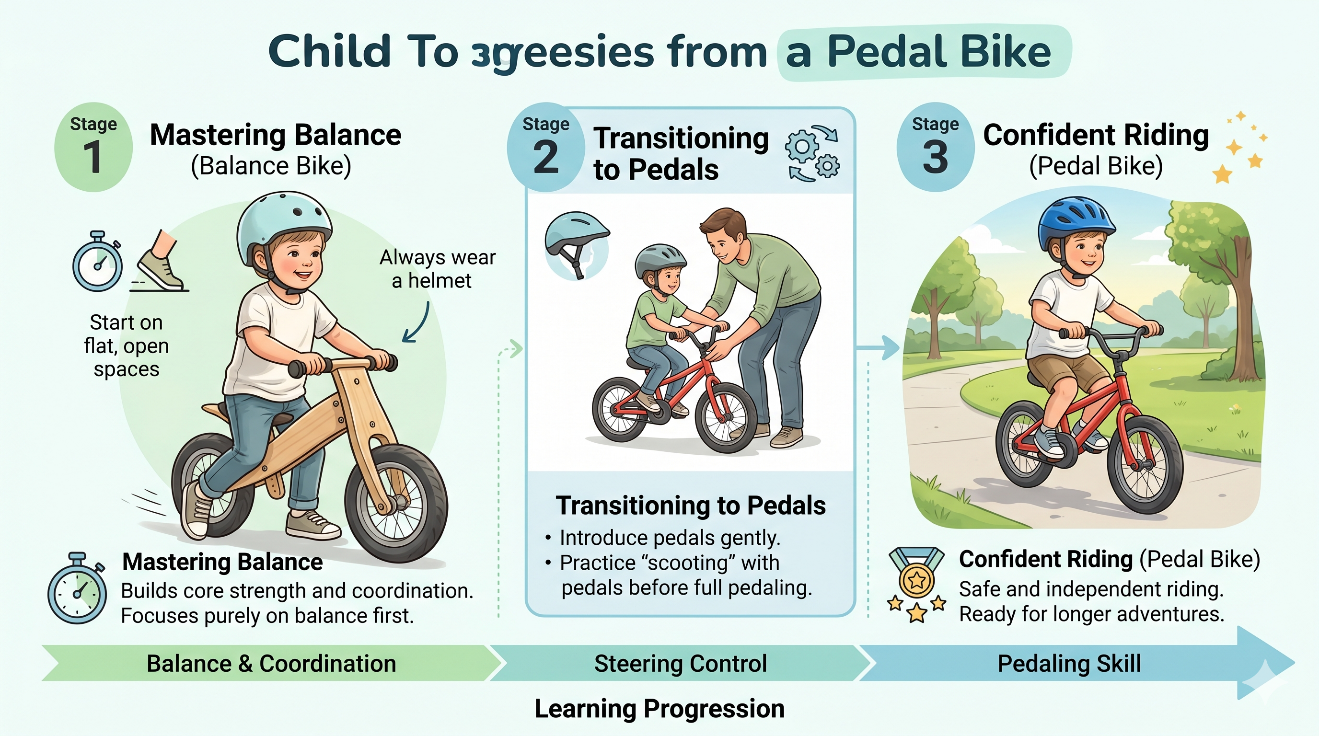
Third, the move to a pedal bike can feel smoother because the child is not learning everything at once. Balance and steering already make sense, so pedals become the new part instead of the entire riding experience feeling new.
This is one reason balance bikes are often easier to market in today’s content-driven channels. Parents are not only buying a product. They are buying a learning approach. That gives sellers more room to explain value beyond color, price, and appearance.
When Training Wheels May Still Make Sense
Even though balance bikes often have the learning advantage, training wheels still make sense in some situations.
For example, some families want a product that looks like a full bicycle from the start. Some children are highly motivated by the idea of pedaling right away. In some markets, a beginner bike with training wheels may also be easier to sell because it feels more familiar and more complete as a gift product.
Training wheels can also make sense when:
the child is already strongly interested in pedals
the market expects a “real bike” look
the product is positioned more as a beginner bike than a skill-building ride-on
the sales channel responds better to traditional small bicycles
So the better answer is not that training wheels are outdated or wrong. The better answer is that they are usually a different kind of product choice. If the goal is direct balance development, balance bikes often come first. If the goal is an early pedal-bike experience in a familiar format, training wheels can still work.
What Importers, Retailers, and Brands Should Pay Attention To
For B2B buyers, this topic is not only about parenting advice. It is also about product-line logic.
If you sell both balance bikes and small pedal bikes, it is a mistake to describe them as if they solve exactly the same problem. They do not. One is usually about learning balance first. The other is usually about introducing pedals in a more traditional format.
That means product pages, catalogs, and sales messaging should explain:
what stage the product is designed for
what skill it helps build first
who the product is best for
how it fits into the child’s riding journey
A balance bike page should focus more on balance, fit, weight, confidence, and transition readiness. Sparkle Rides boasts over a decade of manufacturing experience and is dedicated to building a collaborative platform where excellence and trust converge.
A training-wheel bike page should focus more on pedaling, beginner-bike experience, supported riding, and when the support wheels can later be removed.
When these categories are positioned clearly, buyers compare them more intelligently. That reduces confusion and makes each product easier to sell on its own strengths.
Common Mistakes to Avoid
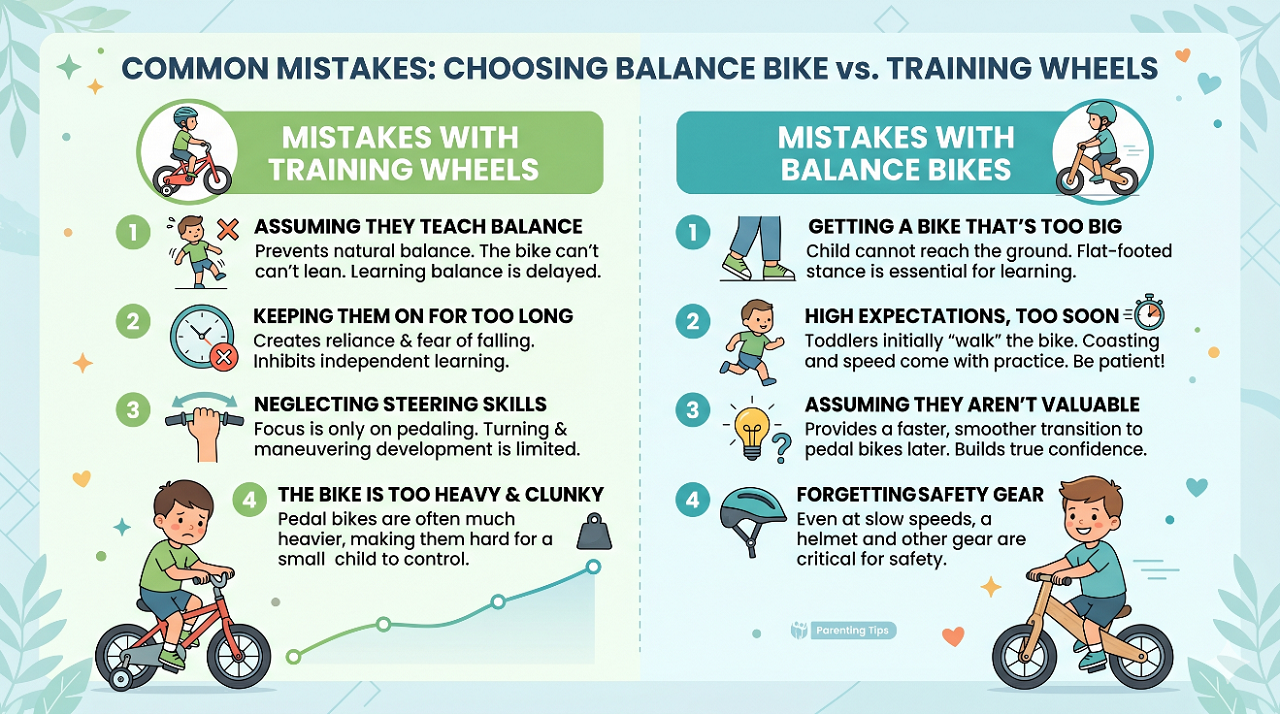
One common mistake is thinking that balance bikes and training wheels are interchangeable. They are not. They may serve a similar age group, but they build different skills first.
Another mistake is choosing based only on what looks easier to adults. A product that looks more supportive is not always the one that helps the child learn more naturally.
A third mistake is weak fit guidance. Whether you are selling a balance bike or a beginner pedal bike, the child still needs the right size, the right seat height, and a setup that feels manageable from the first ride.
For brands and sellers, a bigger mistake is unclear messaging. If both product categories are described in almost the same way, buyers are left to compare only price or looks. Stronger product education usually leads to better category trust and better decision-making.
Final Thoughts
So, are balance bikes better than training wheels?
In many cases, yes — especially if the goal is to help a child build balance, steering control, and riding confidence before moving on to pedals. That is why balance bikes are often seen as the more natural first step.
But that does not mean training wheels have no value. They still make sense in markets and families that want a more traditional beginner-bike experience, especially when pedaling is the main priority from the start.
For parents, the better choice depends on what the child needs to learn first. For importers, retailers, and brands, the better choice depends on product positioning, customer expectations, and how clearly the difference is explained.
The strongest product strategy is not to force one answer for every buyer. It is to explain each product honestly, show where it fits, and help the customer choose with confidence.
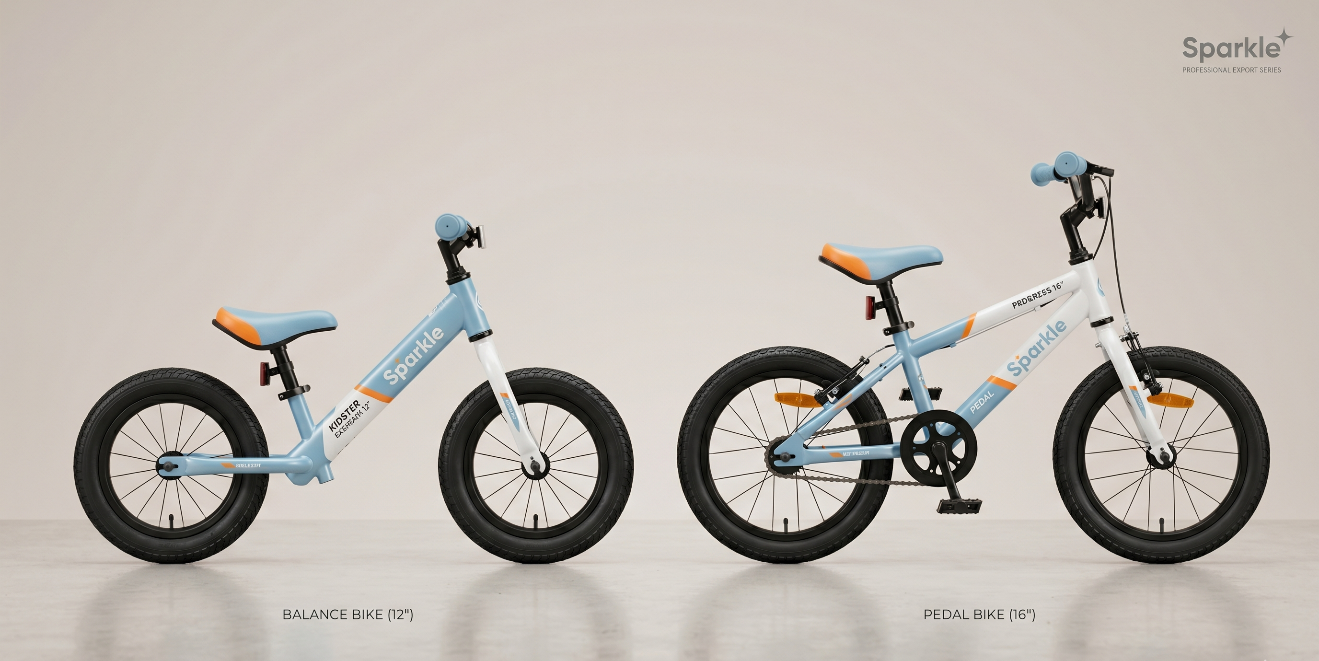
Need help choosing the right balance bike or beginner bike models for your market? Contact us for product recommendations, OEM options, and product details
FAQs
Are balance bikes really better than training wheels?
Balance bikes are often better for teaching children balance, steering, gliding, and confidence before they start pedaling. Training wheels can still be useful for children who are ready to practice pedaling with extra support. For B2B buyers, the better choice depends on the market, age group, and product positioning.
Do balance bikes help children learn to ride faster?
Balance bikes may help many children move to pedal bikes more smoothly because they learn how to balance first. Once balance becomes natural, pedaling is often easier to add. This makes balance bikes attractive for retailers and brands that want to promote a more skill-based riding journey.
What is the best age for balance bike riding?
The best age for balance bike riding is usually around 18 months to 5 years, depending on the child’s height, confidence, and motor skills. For B2B buyers, clear age guidance helps reduce customer hesitation and improve product-page conversion. Learn more in Sparkle Rides’ guide: What Age Should a Child Start Using a Balance Bike?
Should retailers sell balance bikes or bikes with training wheels?
Retailers can sell both, but they should position them differently. Balance bikes are ideal as first-riding products focused on balance and confidence. Bikes with training wheels are better positioned as beginner pedal bikes with added support. Clear product education helps customers choose the right option and reduces purchase hesitation.
What should kids bike brands consider when choosing OEM balance bikes?
Kids bike brands should consider frame material, product weight, wheel size, saddle height, handlebar design, brake options, color customization, packaging, safety requirements, and target price range. A strong OEM balance bike program should match the brand’s market positioning, retail channel, and long-term product-line strategy.
Are balance bikes suitable for private-label kids bike programs?
Yes. Balance bikes are suitable for private-label programs because they can be customized by frame style, material, color, logo, wheel type, packaging, and target age range. For brands and retailers, they can serve as an entry-level riding product or as part of a complete children’s bike collection.
What materials are common for wholesale balance bikes?
Common materials for wholesale balance bikes include carbon steel, aluminum alloy, magnesium alloy, wood, and plastic or nylon composite designs. Each material supports a different price level, weight, durability, and visual style. B2B buyers should choose materials based on target market, budget, logistics, and brand positioning.
How can brands position balance bikes in their product line?
Brands can position balance bikes as the first step in a child’s riding journey. They can sit before beginner pedal bikes, scooters, tricycles, and larger kids bikes in a complete product line. This makes balance bikes useful for customer acquisition, brand loyalty, and long-term category development.
Build Your Next Kids Bike Product Line with Sparkle Rides
Whether you need balance bikes, beginner pedal bikes, scooters, or tricycles, Sparkle Rides supports importers, retailers, and children’s bike brands with OEM/ODM customization, product development, and bulk manufacturing solutions. Contact us today to discuss your target market, materials, colors, packaging, and product-line plan.
Also See Related Products
Magnesium Alloy Balance Bike
Nylon Balance Bike
Aluminum Alloy Balance Bike
Carbon Steel Balance Bike
 English
 Español
 русский